
Author: Kongdy Patch
Date: 06 01,2026
Most OEM buyers evaluate transdermal patch suppliers by comparing quoted unit prices. This is a mistake. The quoted unit price typically represents only 55–70% of the true landed cost of a product. The remaining 30–45% is hidden in tooling charges, packaging components, regulatory documentation, shipping, customs duties, and post-arrival quality control. A buyer who evaluates suppliers on quoted price alone will frequently select a supplier whose total cost is 15–25% higher than the lowest-cost option.
This article gives you the complete cost calculation framework used by experienced transdermal patch buyers, with specific cost ranges and the diagnostic questions that reveal hidden costs before you commit to a supplier.
Every transdermal patch OEM order consists of seven distinct cost components. Understanding each component — and how suppliers typically structure their quotes — is the foundation of accurate cost comparison.
The product cost is the per-patch price quoted by the manufacturer for the patch itself. This is the most visible number in any supplier quote and the one most buyers focus on. Product cost typically ranges from USD 0.05 to USD 0.50 per patch depending on product type (heat patches are at the higher end; simple analgesic patches at the lower end), patch size, active ingredients, and order volume.
Tooling costs cover the custom dies, printing plates, and production line setup required for your specific product. These are typically one-time charges per product or per order, ranging from USD 500 to USD 5,000 depending on complexity. For custom shapes or complex packaging, tooling costs can be higher. Some suppliers waive tooling costs for large orders; others do not. Always confirm tooling cost terms in writing.
The packaging cost is often quoted separately from the patch cost and includes the individual pouches or sachets containing each patch, the secondary box or carton, the Instructions for Use (IFU) leaflet, and any additional packaging components such as desiccants, oxygen absorbers, or compliance seals. Packaging can represent 15–30% of the total product cost, particularly for premium packaging with custom printing and special materials.
For products entering regulated markets, regulatory documentation costs include the preparation of FDA 510(k) submission packages, CE technical files, or other market-specific documentation. These costs are sometimes bundled into the product cost and sometimes quoted separately. For complex products or first-time market entry, regulatory documentation costs can range from USD 2,000 to USD 15,000 per market.
Third-party testing (biocompatibility, stability, efficacy) and certification (ISO 13485 audit support, CE marking fees) may be quoted separately. Testing costs vary widely depending on the test type and the laboratory used. For a complete testing package supporting FDA and CE submissions, expect USD 5,000 to USD 25,000 per product formulation.
International shipping costs depend on order volume, shipping method (sea freight, air freight, express courier), and Incoterms (FOB, CIF, DDP). For a typical OEM order of 100,000 patches, sea freight from China to North America costs approximately USD 1,500–3,500, while air freight costs approximately USD 8,000–15,000 for the same volume. Air freight is 4–8x more expensive but reduces transit time from 25–35 days to 3–5 days.
Customs duties on transdermal patches vary by destination market and product classification. In the US, most transdermal patches are classified under HTS code 3004.90.92 with duty rates of 0% (for pharmaceutical products) to 6.5% (for cosmetic or general use products). In the EU, import VAT (typically 19–25%) applies in addition to any applicable duties. Your customs broker can provide specific rates for your product classification.
To illustrate how these components combine, consider a hypothetical 100,000-piece order of standard analgesic pain relief patches shipped to a US buyer.
Product cost: USD 0.18 per patch × 100,000 = USD 18,000. Tooling cost (one-time): USD 1,200. Packaging components (pouches, boxes, IFU): USD 0.05 per patch × 100,000 = USD 5,000. Regulatory documentation (FDA 510(k) support): USD 5,000. Testing (biocompatibility, stability): USD 8,000. Shipping (sea freight, FOB Shanghai to US West Coast): USD 2,200. Customs duties (0% for pharmaceutical classification): USD 0.00. Total landed cost: USD 39,400, equivalent to USD 0.394 per patch.
The quoted unit price of USD 0.18 represents only 46% of the true landed cost of USD 0.394. A buyer comparing suppliers on quoted unit price alone would have missed 54% of the total cost picture.
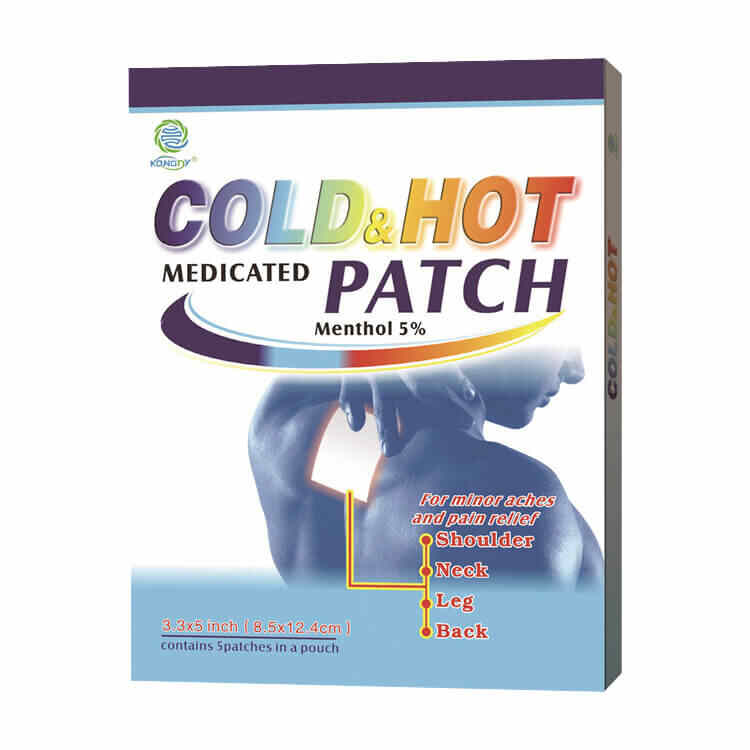
Product cost varies significantly by product type. The table below provides realistic cost ranges for a 100,000-piece OEM order with standard packaging, sea freight, and US import.
| Product Type | Quoted Unit Price Range | Estimated Landed Cost |
|---|---|---|
| Simple Analgesic Patch | $0.08 – $0.18 | $0.22 – $0.42 |
| Heat Patch | $0.20 – $0.40 | $0.45 – $0.80 |
| Capsicum Plaster | $0.15 – $0.30 | $0.35 – $0.65 |
| Cooling Gel Patch | $0.25 – $0.50 | $0.55 – $1.00 |
| Detox Foot Patch | $0.15 – $0.30 | $0.35 – $0.65 |
| Mosquito Repellent Patch | $0.05 – $0.12 | $0.15 – $0.30 |
These ranges are based on standard formulations, custom packaging, and standard regulatory documentation. Custom formulations with proprietary active ingredients, premium packaging materials, or specialized regulatory pathways can increase costs by 30–100%.
Per-unit costs decrease significantly with order volume. A 500,000-piece order typically achieves 15–25% lower per-unit cost than a 100,000-piece order due to fixed cost amortization and volume discounts on raw materials. The cost curve flattens beyond 1 million pieces per order for most product types, so the optimal order size for cost efficiency is typically 500,000 to 1 million pieces for established products.
Custom formulations are more expensive than adapting existing manufacturer formulations. If your formulation requirements are flexible, working with your manufacturer's existing formulation as a starting point can reduce both formulation development costs (saving USD 2,000–10,000) and per-unit production costs (typically 5–15% lower than fully custom formulations).
Premium packaging materials (specialty films, custom printing techniques, complex multi-component packaging) can add 20–40% to packaging costs. Standard packaging materials with custom artwork achieve a similar visual impact at lower cost. Consider whether your target market truly requires premium packaging or whether standard materials with strong artwork can achieve your brand positioning goals at lower cost.
Sea freight is 4–8x cheaper than air freight, but adds 20–30 days to transit time. For established supply chains with reliable demand forecasting, sea freight is the standard choice. Air freight is appropriate for urgent orders, product samples, market entry trial batches, and seasonal demand spikes. Express courier (DHL, FedEx) is suitable for small urgent shipments but is the most expensive option per kilogram.
Most Chinese manufacturers quote in USD, but production costs are incurred in CNY (Chinese Yuan). Significant exchange rate fluctuations between quote date and payment date can affect your actual cost. For large orders, consider currency hedging or payment terms that minimize exchange rate exposure.
Even with a high-quality manufacturer, expect defect rates of 0.5–2.0% on finished patches. This is typically built into pricing through over-production, but the actual cost of defects (rework, replacement, customer complaints) should be factored into your total cost calculation.
Larger orders achieve lower per-unit cost but increase inventory carrying costs (warehousing, capital tied up in inventory, insurance, obsolescence risk). Calculate your total cost of ownership including these factors when comparing order sizes.
Working with an overseas manufacturer requires time investment for communication, quality issue resolution, and project management. For buyers with limited internal resources, this time cost can be significant. Factor in the time required for product qualification, sample review, production monitoring, and quality issue resolution when evaluating the true cost of an OEM relationship.
To get a comparable cost quote from multiple suppliers, provide each supplier with the same detailed product specification and request a quote in a standardized format.
Include: product type and description, target order quantity (with volume options for comparison), patch dimensions and active ingredients, packaging specifications (pouch, box, IFU), regulatory documentation requirements (FDA, CE, or other markets), required testing (biocompatibility, stability, efficacy), shipping terms (FOB, CIF, DDP, or other), payment terms, and lead time requirements. With this information, suppliers can provide accurate, comparable quotes.
A quote that is significantly lower than competitors may be missing cost components. Ask for a detailed cost breakdown if the quote seems unusually low. Quotes that exclude regulatory documentation, testing, or shipping are incomplete and cannot be compared to all-inclusive quotes. Quotes that include vague terms like "packaging cost included" without specifying quantities and specifications are difficult to verify.
At Kangdi Medical, we provide detailed, transparent cost quotes that break down all seven cost components for every buyer inquiry. Our quotes specify product cost, tooling cost, packaging components, regulatory documentation cost, testing cost, shipping cost, and customs duty assumptions. We work with buyers to identify cost optimization opportunities that do not sacrifice quality — typically achieving 10–20% cost savings compared to initial supplier quotes through formulation standardization, packaging optimization, and volume planning.
For new OEM buyers, we provide a detailed cost projection before commitment so you can evaluate the true economics of your product launch. For established OEM buyers, we conduct annual cost reviews to identify ongoing optimization opportunities and ensure your cost structure remains competitive as your business scales.
The lowest quoted unit price rarely produces the lowest total cost. Use the framework in this article to evaluate any transdermal patch supplier quote on a total landed cost basis, including all seven cost components and the hidden costs most buyers miss. A manufacturer who provides transparent, detailed cost information is a manufacturer you can build a long-term partnership with.
Contact Kangdi Medical to request a detailed cost quote for your product specification. Our team will provide a complete cost breakdown and identify optimization opportunities tailored to your product, market, and volume profile.
Email: kongdy202113@gmail.com
WhatsApp: +86 15517541011
Website: www.kongdypatch.com
Specializing in the integration of scientific research, production and marketing of medical devices


 0086-15517541011
 No.4,2nd Area,SME Poineer Park,Industry Cluster Zone,Huaiyang Country, Zhoukou, Henan, China.
 kongdy202113@gmail.com