
Author: Kongdy Patch
Date: 06 29,2026
Capsicum plasters (also called chili plasters, capsaicin patches, or hot plasters) are one of the oldest and most widely used pain relief patches in the world, with origins in traditional Chinese medicine and a long history of use across Asia, Europe, and increasingly the Americas. But despite their popularity, many people misunderstand how they work, what to expect when using them, and how to use them safely. This 2026 consumer science guide explains the actual mechanism of action, the sensations you can expect, the practical use guidelines, and the common mistakes that can ruin the experience for first-time users.
Capsicum plaster is an adhesive patch containing capsaicin (the active compound in chili peppers) or capsicum extract, applied to the skin over painful muscles or joints to provide warming pain relief. The product typically contains: capsicum extract (0.5-5% capsaicin concentration), herbal ingredients (menthol, camphor, eucalyptus oil in some formulations), adhesive matrix (rubber or acrylic adhesive), and backing material (non-woven or PE film). The product has been used for centuries in traditional medicine, with modern pharmaceutical-grade versions developed in the 20th century and now available globally over-the-counter. The active ingredient capsaicin is the same compound that makes chili peppers hot, and it is responsible for both the warming sensation and the pain relief mechanism.
The science of capsaicin pain relief is well-established. The mechanism of action: capsaicin binds to a specific receptor called TRPV1 (Transient Receptor Potential Vanilloid 1), which is found on sensory nerve endings. TRPV1 is the same receptor that responds to actual heat (above 43°C), which is why capsaicin creates a burning or warming sensation even though the patch temperature is not actually hot. The pain relief mechanism: when capsaicin activates TRPV1 repeatedly, the nerve endings become desensitized over time, reducing their ability to transmit pain signals. This is called "defunctionalization" of the nerve fibers. The timeline: initial application creates a warming or burning sensation, with peak intensity at 30-60 minutes; with repeated use over days to weeks, the pain-relieving effect becomes more pronounced as the nerve endings become desensitized. The practical implication: capsicum plaster is most effective for chronic pain conditions when used consistently over 2-4 weeks, not for acute pain relief.
First-time users often have unrealistic expectations about capsicum plaster sensations, leading to either premature discontinuation (too intense) or disappointment (too mild). The normal sensations: initial warmth (within 5-15 minutes), peak warmth or burning (within 30-60 minutes, ranging from mild warmth to strong burning depending on the product concentration and individual sensitivity), gradual reduction in sensation (over 2-4 hours as the capsaicin effect stabilizes), and possible residual warmth (for several hours after removal). The sensations that are NOT normal: severe burning that makes it impossible to tolerate the patch, blistering or skin damage, swelling or hives, and pain that worsens rather than improves. The most common mistake is leaving the patch on too long during the first use, leading to excessive burning and skin irritation.
The first-time user guide helps new users get the best experience. Step 1, choose a lower concentration product (0.5-1% capsaicin) for first use, with higher concentrations available once you are familiar with the sensations. Step 2, test on a small area first (apply to a small area of skin for 30 minutes to check for skin sensitivity). Step 3, apply to clean, dry skin (no lotions, oils, or broken skin). Step 4, start with a shorter duration (30-60 minutes for first use, increasing to 4-8 hours as tolerated). Step 5, monitor your skin (check for excessive redness, swelling, or blistering during use; remove the patch if any of these occur). Step 6, wash hands thoroughly after application (capsaicin on hands can transfer to eyes, nose, or other sensitive areas, causing intense burning). The first-time users who have the best experience are those who start conservatively and build up gradually.
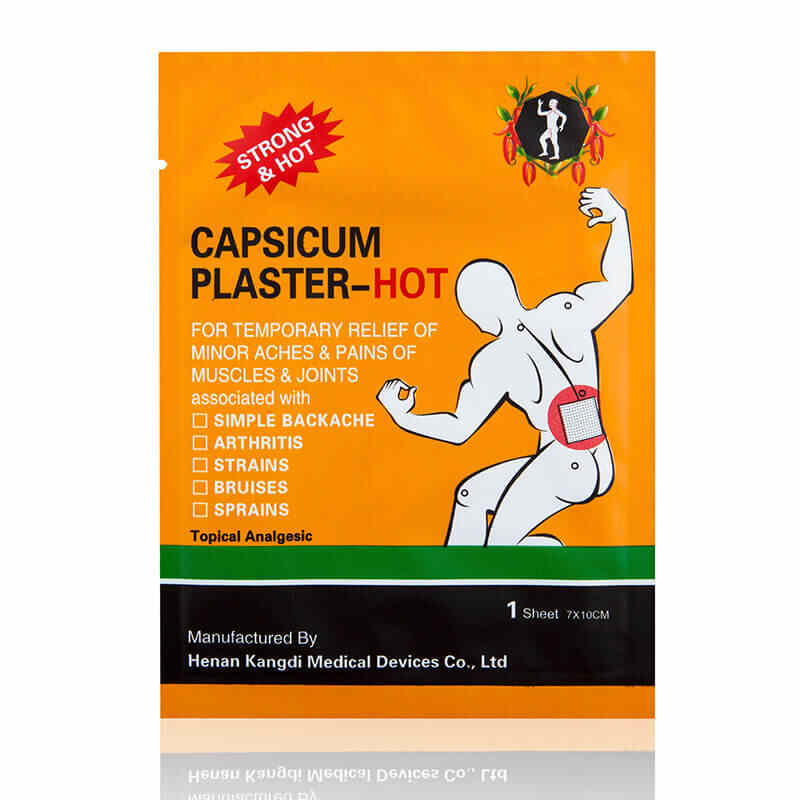
Capsicum plaster is most effective for specific types of pain. The best uses: chronic muscle pain (back pain, neck pain, shoulder pain from tension or strain), chronic joint pain (mild arthritis, repetitive strain injuries), neuropathic pain (some forms of nerve pain, though effectiveness varies), and post-exercise muscle soreness (after intense training or competition). The less effective uses: acute injury pain (where inflammation is present, heat may worsen it), severe arthritis (where pharmaceutical interventions may be needed), and referred pain from internal organs (where the source of pain is not musculoskeletal). The most common mistake is using capsicum plaster for acute injuries where inflammation is present; in these cases, cold therapy is more appropriate than heat.
Several common mistakes can ruin the capsicum plaster experience. Mistake 1, leaving the patch on too long during first use (causes excessive burning and skin irritation; start with 30-60 minutes for first use). Mistake 2, applying to broken or irritated skin (causes intense burning and possible skin damage; only apply to intact skin). Mistake 3, not washing hands after application (capsaicin transfers to eyes, nose, or other sensitive areas; wash thoroughly with soap and water). Mistake 4, using on the face or near mucous membranes (causes intense burning and possible injury; only use on body areas with intact skin). Mistake 5, expecting immediate pain relief (capsaicin works through desensitization over time; expect gradual improvement over days to weeks, not immediate relief). Mistake 6, using too high concentration too soon (start with lower concentrations and build up to higher concentrations as tolerated).
Capsicum plaster is generally safe when used as directed, but several side effects and safety considerations are important. The common side effects: skin redness, burning or warming sensation, mild itching, and skin dryness at the application site. The less common but more serious side effects: severe burning or blistering (usually from overuse or sensitive skin), allergic reactions (rash, swelling, hives), and skin discoloration (usually temporary, resolves over weeks). The people who should avoid capsicum plaster: people with broken or irritated skin, people with known allergies to capsaicin or chili peppers, pregnant or breastfeeding women (use with caution and consult a healthcare provider), and children under 12 (typically not recommended for young children). The users who have the safest experience are those that follow the instructions carefully and pay attention to their body's signals.
Capsicum plaster is one of several pain relief patch options. The comparison: capsicum plaster (warming, capsaicin-based, best for chronic muscle and joint pain, takes days to weeks for full effect), menthol patch (cooling, menthol-based, best for acute muscle soreness and tension, immediate effect), lidocaine patch (numbing, lidocaine-based, best for nerve pain and post-herpetic neuralgia, requires prescription or OTC), and diclofenac patch (anti-inflammatory, NSAID-based, best for arthritis and inflammatory pain, prescription required in most markets). The best choice depends on the type of pain, the desired speed of relief, and the individual's medical history. The users who benefit most are those that match the product to the pain type and use it consistently as directed.
Capsicum plaster is a well-established pain relief product with a long history and solid scientific foundation. The brands that succeed in this category are those that combine effective products with clear consumer education, that match the product concentration to the intended use, and that build trust through consistent performance. The brands that fail are those that overpromise immediate pain relief, that ignore the importance of proper use instructions, or that treat capsicum plaster as a commodity product without differentiation. At Kangdi Medical, we support capsicum plaster brands with product development, consumer education, and category expertise, with 25+ years of experience in the capsicum plaster category.
Email: kongdy202113@gmail.com
WhatsApp: +86 15517541011
Website: www.kongdypatch.com
Specializing in the integration of scientific research, production and marketing of medical devices


 0086-15517541011
 No.4,2nd Area,SME Poineer Park,Industry Cluster Zone,Huaiyang Country, Zhoukou, Henan, China.
 kongdy202113@gmail.com