

Author: Kongdy Patch
Date: 06 29,2026
Heat patches have become an essential accessory for athletes who train and compete in cold conditions. Runners, cyclists, hikers, mountaineers, skiers, snowboarders, and outdoor workers all rely on warming patches to maintain muscle temperature, prevent injury, and extend their time outdoors. But not all heat patches are the same, and using them incorrectly can actually hurt performance rather than help it. This 2026 consumer guide covers the practical aspects of using heat patches for athletic and outdoor activities: how to choose the right product, where to apply them, when to use them, and the common mistakes that can interfere with training and performance.
Athletes use heat patches for several specific reasons. The muscle warming benefit: warm muscles contract more efficiently, are less prone to strain, and recover faster than cold muscles; heat patches can help maintain muscle temperature during breaks in cold-weather training. The injury prevention benefit: cold muscles are more prone to strains, sprains, and tears; maintaining warmth during breaks helps prevent these injuries. The comfort benefit: cold exposure is distracting and uncomfortable, reducing focus and motivation; heat patches help athletes stay comfortable during long sessions in cold conditions. The recovery benefit: some athletes use heat patches during cool-down or post-workout to support recovery, particularly for chronic tightness or soreness. The key insight: heat patches are most useful for breaks, transitions, and cool-down, not during active exercise when the body generates its own heat.
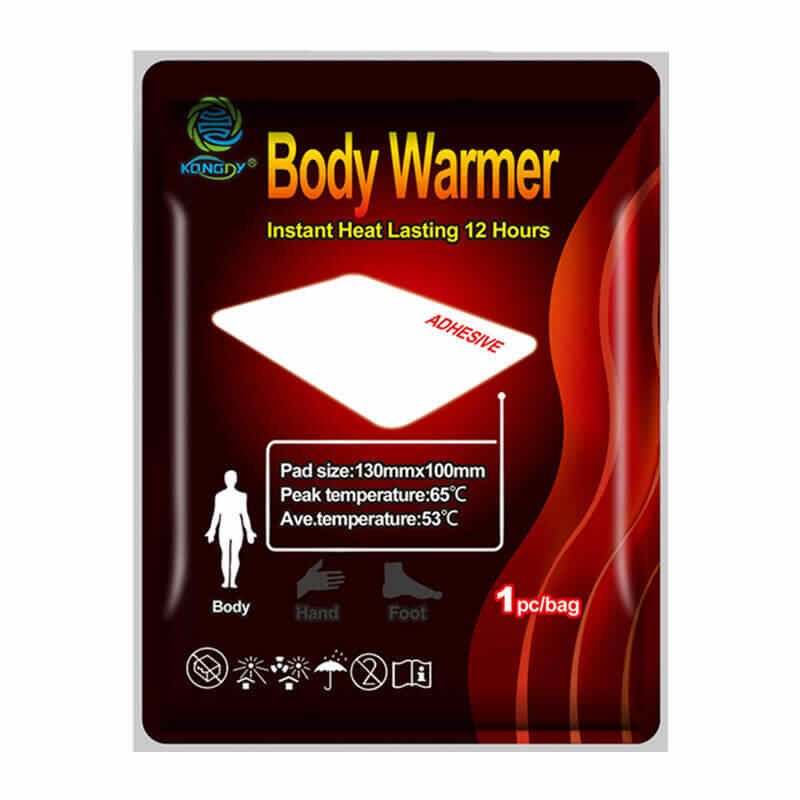
The four main types of heat patches used by athletes are: body warmers (large adhesive patches for the back, shoulders, or hips, providing 8-12 hours of warmth at 40-45°C), toe warmers (small adhesive patches inside shoes or socks, providing 6-8 hours of warmth at 35-40°C), hand warmers (pocket-sized packets that provide warmth when held, typically 8-12 hours at 50-60°C), and specialty patches (designed for specific body parts like the lower back, knees, or neck). The best choice depends on the activity, the duration, and the specific body parts that need warming. The most common mistake is using body warmers inside gloves or shoes, where the heat is trapped and can cause overheating; toe warmers are designed for shoe use, with lower temperatures appropriate for the enclosed environment.
The application location matters for both effectiveness and safety. The best locations: the lower back (large muscle group with good blood flow, useful for back pain and core warmth), the shoulders and upper back (large muscle group, useful for tension and shoulder warmth), the abdomen (core warming, useful for endurance activities in extreme cold), and the thighs (large muscle group, useful for runners and cyclists). The locations to avoid: the chest (over the heart, can cause discomfort and potentially affect heart rate), directly on joints (joints need mobility, and heat patches can restrict movement), on irritated or damaged skin (can worsen skin conditions), and on areas with poor circulation (can cause burns due to reduced heat dissipation). The most common application mistake is placing the patch over a joint or over a sensitive area, leading to discomfort or skin irritation.
The timing of heat patch use matters for effectiveness. The pre-activity use: apply 15-30 minutes before activity to allow the patch to reach full temperature, providing initial warmth as you start your activity. The break use: this is the primary use case for heat patches; apply during breaks (between sets, at aid stations, during transitions) to maintain muscle warmth and prevent cooling. The cool-down use: apply after activity to support recovery, particularly for tight or sore muscles; the warmth increases blood flow and can reduce muscle soreness. The night use: apply before sleep to maintain warmth during cold nights, particularly useful for camping, mountaineering, and outdoor work. The use to avoid: during high-intensity activity when the body is generating significant heat, adding external heat can cause overheating, dehydration, and reduced performance.
Athletes make several common mistakes with heat patches. Mistake 1, using heat patches during high-intensity exercise (the body is already generating significant heat; adding external heat can cause overheating, dehydration, and reduced performance). Mistake 2, applying patches over joints (joints need mobility; patches restrict movement and can cause discomfort during activity). Mistake 3, applying patches directly to skin without checking the temperature (some patches reach 50°C or higher; direct contact can cause burns, especially during prolonged use). Mistake 4, using the same patch for too long (most patches are designed for 8-12 hours; longer use increases burn risk and reduces effectiveness). Mistake 5, ignoring skin reactions (some athletes develop skin irritation or allergic reactions to the adhesive; continued use can worsen the condition). Mistake 6, using low-quality patches (cheap patches may have inconsistent temperature, weak adhesion, or unpleasant odors; investing in quality patches improves the experience and reduces risks).
Heat patches are one of several warming strategies for athletes. The comparison: heat patches (convenient, single-use, no batteries, but generate waste and have limited duration), heated clothing (reusable, integrated warming, but expensive and requires batteries or power), chemical hand warmers (high temperature, good for hand warming, but single-use and can be too hot for prolonged contact), and merino wool base layers (excellent insulation, reusable, but less direct heat). The best approach typically combines multiple strategies: merino wool base layers for insulation, heat patches for breaks and transitions, and chemical hand warmers for severe cold. The athletes who manage cold-weather performance best are those that layer their warming strategies, using each tool for its specific strength.
Heat patch safety requires attention to prevent burns. The risk factors: prolonged use (longer than recommended duration increases burn risk), direct skin contact (some patches are designed for clothing use, not direct skin contact), high temperature patches (patches above 50°C are more likely to cause burns), sensitive skin (people with sensitive skin are more prone to burns and irritation), and medical conditions (people with diabetes, peripheral neuropathy, or circulation problems have reduced sensation and are at higher risk). The prevention strategies: follow the manufacturer's instructions for duration and placement, check the patch temperature before direct skin contact, use a cloth barrier for sensitive skin, remove the patch if it causes discomfort, and avoid using patches while sleeping. The athletes who use heat patches safely are those that follow the instructions and pay attention to their body's signals.
Different activities call for different heat patch products. For running: lightweight body warmers for the lower back, toe warmers for cold-weather running, with patches applied during breaks or for cool-down. For cycling: body warmers for the lower back, hand warmers for cold hands, with patches applied during breaks at cafes or rest stops. For hiking and mountaineering: large body warmers for the back and shoulders, toe warmers for cold feet, hand warmers for cold hands, with patches applied during breaks and bivouacs. For skiing and snowboarding: body warmers for the back, hand warmers inside gloves, toe warmers inside boots, with patches applied during chairlift rides and breaks. For outdoor work: large body warmers for the back and shoulders, hand warmers for cold hands, with patches applied throughout the workday.
The athletic heat patch category is evolving rapidly. The smart heat patches: integration of temperature sensors and smartphone connectivity, allowing athletes to monitor patch temperature and adjust as needed. The rechargeable heat patches: development of rechargeable battery-powered heat patches that provide adjustable heat for 4-8 hours, addressing the environmental concerns of single-use patches. The performance-specific patches: patches designed for specific sports with optimized shape, adhesion, and heat profile. The sustainable patches: development of biodegradable or compostable heat patches, addressing the environmental concerns of single-use products. The brands that anticipate these trends and invest in innovation will capture disproportionate market share in the growing athletic heat patch category.
Heat patches are a valuable tool for athletes who train and compete in cold conditions, but they are most effective when used appropriately. The athletes who benefit most are those that use patches for breaks, transitions, and cool-down, that choose the right patch for the activity, and that follow safety guidelines to prevent burns and skin irritation. At Kangdi Medical, we support athletic and outdoor brands with heat patch product development, athlete education, and category expertise, with 20+ years of experience in the warming products category.
Email: kongdy202113@gmail.com
WhatsApp: +86 15517541011
Website: www.kongdypatch.com
Specializing in the integration of scientific research, production and marketing of medical devices


 0086-15517541011
 No.4,2nd Area,SME Poineer Park,Industry Cluster Zone,Huaiyang Country, Zhoukou, Henan, China.
 kongdy202113@gmail.com