
Author: Kongdy Patch
Date: 06 22,2026
Mosquito repellent patches are among the most convenient insect protection options for families, travelers, and outdoor enthusiasts. Unlike sprays that need to be applied to skin or clothing and can have strong odors or chemical residues, patches are applied to clothing (typically collars, sleeves, or hats) and provide hours of protection without skin contact. The category has grown substantially as consumers seek DEET-free, family-friendly alternatives to traditional sprays. But not all mosquito patches work equally well, and the right way to use them matters as much as the product you choose. This practical guide covers how mosquito patches work, what active ingredients to look for, how to use them effectively for different scenarios, and which products deliver on their claims. Whether you're planning a family camping trip, a backyard barbecue, or a tropical vacation, this guide will help you choose and use the right mosquito patches for your specific situation.
Mosquito repellent patches work by releasing volatile active ingredients that mosquitoes find repellent. The active ingredients evaporate slowly from the patch, creating a localized "repellent zone" around the wearer (typically 30-100 cm radius, depending on the formulation and concentration). Mosquitoes detect their targets through CO2, body heat, and body odors, and the repellent ingredients interfere with these detection mechanisms, causing mosquitoes to fly away or avoid the area. The protection is localized rather than global — the patch protects the area immediately around where it is applied, not the entire body. This is why strategic placement matters (collar, hat, sleeve) and why some users apply multiple patches for broader coverage. The protection typically lasts 4-12 hours per patch, with duration depending on the active ingredients, the patch design, and environmental conditions (heat, humidity, wind).
There are several active ingredient categories used in mosquito repellent patches, with different efficacy, safety, and duration profiles. Citronella and lemon eucalyptus (plant-based): these are the most common ingredients in DEET-free patches, with moderate efficacy against mosquitoes and good safety profile. Citronella has been used for over 100 years as an insect repellent, with the most common formulation being 10-30% concentration in the patch. Lemon eucalyptus (with the active constituent PMD, para-menthane-3,8-diol) is more effective than citronella and is CDC-recommended as an effective botanical alternative to DEET. The duration is typically 4-6 hours per patch. Geraniol and other plant oils (geranium, lavender, peppermint, cedarwood): these have moderate repellent effect and pleasant fragrances. The efficacy is generally lower than citronella or lemon eucalyptus, but the pleasant scent and natural positioning make them popular for family use. Duration is typically 3-5 hours per patch. Synthetic compounds (DEET, picaridin, IR3535): these are the most effective repellent ingredients but are rarely used in patch format due to safety concerns with skin contact and stronger chemical odor. Most patches use plant-based ingredients to align with the family-friendly, DEET-free positioning.
The scientific research on mosquito repellent patches provides useful context for consumer expectations. The key findings: patches are effective against many common mosquito species, with significant variation between species (some species are more easily repelled than others), patches work best for short-duration outdoor activities (1-4 hours) rather than extended exposure, patches are less effective than sprays applied to skin or clothing because of the localized protection zone, and patches work best as part of a multi-layered protection strategy (combined with long sleeves, long pants, and avoiding peak mosquito times). The honest expectation is that patches provide moderate, useful protection for typical outdoor activities, but they are not a complete substitute for stronger repellents in high-risk situations (malaria zones, dengue zones, areas with high mosquito density). For travelers to high-risk areas, CDC recommends DEET, picaridin, IR3535, or lemon eucalyptus (PMD) — and even then, multiple layers of protection are recommended.
For backyard use (barbecues, outdoor dining, gardening), mosquito patches work well because the exposure is typically short (1-3 hours), the area is limited (your own yard), and you can combine patches with other measures (fans, citronella candles, eliminating standing water). The recommended approach: apply 1-2 patches per person (one on collar, one on sleeve or hat), reapply or replace patches if the activity extends beyond 4 hours, combine with environmental measures (fans, citronella candles, eliminating standing water), and avoid wearing strong fragrances (perfumes, scented lotions) that attract mosquitoes. For children, apply patches to their clothing (never directly to skin), keep them away from the mouth and eyes, and consider gentler formulations with lower concentrations of active ingredients.
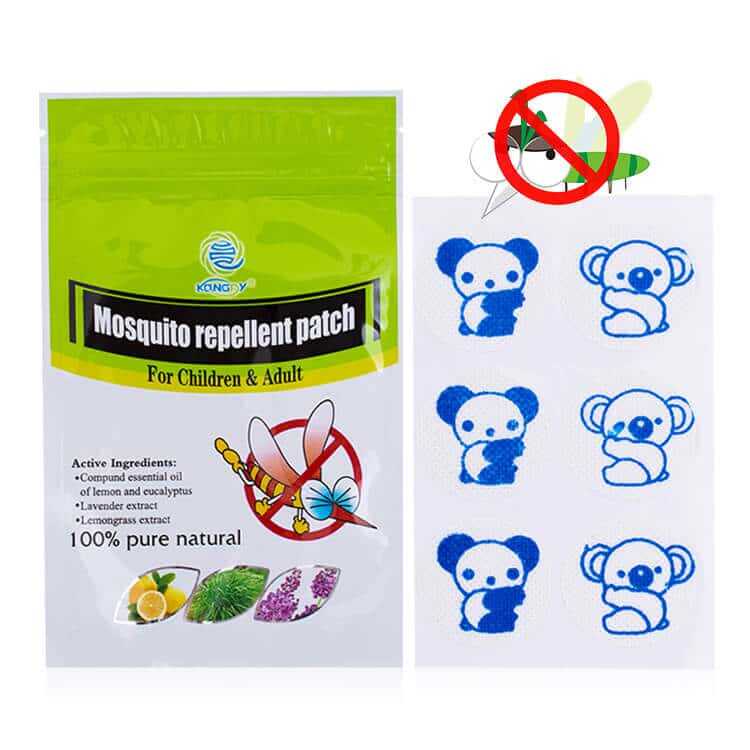
For camping and extended outdoor activities (hiking, fishing, hunting, gardening), mosquito patches are useful but typically not sufficient as the sole protection method. The recommended approach: apply multiple patches per person (2-4 patches distributed around the body: collar, sleeves, hat, socks) for broader coverage, combine with permethrin-treated clothing for high-mosquito areas (permethrin is applied to clothing, not skin, and lasts through multiple washes), use mosquito netting for sleeping areas (essential in malaria or dengue zones), and consider stronger repellents (DEET or picaridin sprays applied to exposed skin) for high-risk situations. The patches are best for daytime activities where moderate protection is sufficient; for sleeping or extended evening exposure, additional measures are typically needed.
For tropical travel and travel to high-risk destinations (areas with malaria, dengue, Zika, yellow fever, or other mosquito-borne diseases), patches alone are not adequate protection. The recommended approach: consult a travel medicine specialist before travel for destination-specific advice, use CDC-recommended repellents (DEET 20-30%, picaridin 20%, IR3535, or PMD-based lemon eucalyptus products) applied to exposed skin, wear long sleeves and pants treated with permethrin, sleep under mosquito nets in non-air-conditioned accommodations, consider antimalarial prophylaxis if traveling to malaria zones, and use patches as a complementary measure rather than the primary protection. The patches are useful for travel because they are convenient, lightweight, and don't need to be applied to skin, but they should not replace the stronger repellents and protective measures required in high-risk areas.
Mosquito protection during pregnancy and for young children requires special consideration. For pregnant women: DEET is considered safe by the CDC and WHO for use during pregnancy and breastfeeding, but many pregnant women prefer to avoid chemical repellents and choose plant-based alternatives (lemon eucalyptus/PMD, citronella). Mosquito patches can be a useful part of a multi-layered protection approach, applied to clothing rather than skin. For infants under 2 months: most repellents are not recommended; protection should rely on physical barriers (long sleeves, pants, mosquito nets). For children 2 months and older: CDC-recommended repellents (DEET, picaridin, lemon eucalyptus/PMD) are safe when used as directed, with the lowest effective concentration preferred for children. Mosquito patches are a useful supplement, but should not be the primary protection for young children in high-risk areas. Always consult with a pediatrician for specific recommendations.
Mosquito patches are primarily designed for outdoor use, but they can be useful indoors in certain situations. For bedroom use: patches can be placed on the bed frame, nightstand, or pillow for localized nighttime protection. The protection is typically shorter than outdoor use due to the closed environment, but for short-term use (sleeping during a camping trip, in a hotel room without screens), patches can be useful. For indoor event use: patches are useful for indoor gatherings (parties, weddings) in areas with mosquitoes, particularly in the evening. For nighttime camping: patches alone are not sufficient; use mosquito nets for sleeping and consider plug-in repellent devices for tent interiors. The key consideration for indoor use is ventilation — patches work better in well-ventilated spaces because the air movement helps distribute the repellent vapors.
When choosing mosquito patches, the dimensions that matter most are: active ingredients (look for lemon eucalyptus/PMD for best botanical efficacy, or citronella for traditional natural option), duration (4-6 hours minimum for typical outdoor activities, longer is better), number per pack (consider how many you'll need for a typical use case — a pack of 10-30 patches is common), scent (choose mild or unscented if you or your family members are sensitive to smells), price per patch (typical range is USD 0.20-1.00 per patch), and brand reputation (established brands are more likely to deliver on efficacy claims). The best products in the category are those that combine effective active ingredients (preferably with PMD or well-formulated citronella), consistent release over the claimed duration, and pleasant or minimal scent.
The most common mistakes in mosquito patch use are: applying patches to skin instead of clothing (patches are designed for clothing; skin contact can cause irritation and is less effective), relying on patches alone in high-risk areas (patches are useful but not sufficient in malaria or dengue zones), using expired patches (active ingredients degrade over time), storing patches in hot or humid conditions (degrades the active ingredients), applying too few patches (one patch per person provides limited coverage; multiple patches are better), applying patches to areas that will be covered by other clothing (the patch needs to be exposed to the air to release active ingredients), and expecting patches to work in heavy wind (wind disperses the repellent vapors, reducing effectiveness). Avoiding these mistakes requires reading the product instructions carefully, applying patches strategically, and using patches as part of a broader protection approach rather than as the sole measure.
The most effective mosquito protection strategy combines multiple measures. The recommended layered approach: step 1, environmental measures (eliminate standing water, use fans, citronella candles for outdoor dining). Step 2, clothing (long sleeves and pants, permethrin-treated clothing for high-risk areas, light colors which are less attractive to mosquitoes). Step 3, mosquito patches (apply to collar, sleeves, hat for convenient, DEET-free protection). Step 4, topical repellents (DEET 20-30%, picaridin, lemon eucalyptus/PMD for exposed skin in high-risk situations). Step 5, sleeping protection (mosquito nets for sleeping, plug-in repellent devices for indoor spaces). Step 6, destination-specific measures (antimalarial prophylaxis, yellow fever vaccination for travel to endemic areas). The combination of these measures provides much more robust protection than any single approach.
Smart buying for mosquito patches means matching the product to your use case. For occasional family use: any reputable brand with PMD or citronella, purchased in small packs. For regular outdoor use (camping, gardening): larger packs (30-100 patches) from brands with proven efficacy. For travel: small travel packs (5-10 patches) for convenient packing. For resale/retail: bulk purchasing from OEM manufacturers (such as Kangdi Medical) at wholesale prices, with branding options for resale. The best value comes from bulk purchasing of effective products, with the per-patch cost typically ranging from USD 0.10-0.50 in bulk to USD 0.50-1.00 in retail packaging. The cheapest options are often the least effective, so balance cost with expected performance.
Mosquito repellent patches. are a useful, convenient, and family-friendly option for moderate mosquito protection. They work best as part of a multi-layered protection strategy rather than as the sole measure, particularly in high-risk areas. The right product for your use case depends on the scenario (backyard, camping, travel, pregnancy/children, indoor), the active ingredients (lemon eucalyptus/PMD is most effective), and the duration needed. By understanding how patches work and using them strategically, you can dramatically reduce mosquito bites and the discomfort (and potential disease risk) that comes with them.
For brand owners interested in developing or sourcing mosquito repellent patches, contact Kangdi Medical. Our team provides formulation expertise, manufacturing quality, and regulatory support for global markets.
Email: kongdy202113@gmail.com
WhatsApp: +86 15517541011
Website: www.kongdypatch.com
Specializing in the integration of scientific research, production and marketing of medical devices


 0086-15517541011
 No.4,2nd Area,SME Poineer Park,Industry Cluster Zone,Huaiyang Country, Zhoukou, Henan, China.
 kongdy202113@gmail.com