
Author: Kongdy Patch
Date: 05 15,2026
You've seen the market. Pharmacies, sports brands, wellness labels, and baby-care lines are all selling cooling gel patches — and the category is growing. You want in. Maybe you're a brand looking to expand your product range. Maybe you're an importer who needs a reliable custom cooling gel patch OEM supplier. Or maybe you're building a health brand from scratch.
The question is: how do you actually go from "I want a cooling patch product" to "my branded patches are on shelves"?
This guide walks you through the entire OEM & ODM customisation process — from formula brief to finished product — so you know exactly what to expect, what decisions you'll make, and how to avoid the common mistakes that delay launches.
Before you contact any cooling gel patch manufacturer, you need to be clear on your product's purpose. This single step determines everything that follows — formula, size, materials, and regulatory pathway.
Ask yourself:
Clarity here saves weeks of back-and-forth with your cooling patch ODM supplier and ensures you get a formula that actually matches your brand promise.
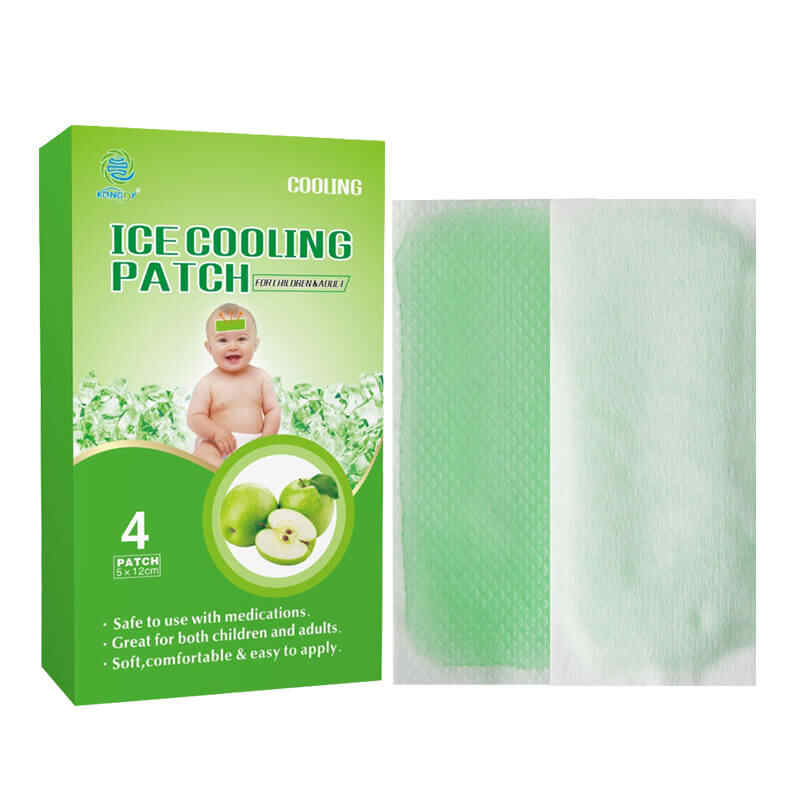
This is the most important technical decision in the custom cooling gel patch OEM process. The formula determines efficacy, skin feel, shelf life, and regulatory classification.
Every cooling gel patch starts with a hydrogel base — a water-based gel matrix that provides the sustained cooling sensation and acts as the carrier for active ingredients. The quality of this base directly affects how long the patch cools and how comfortable it feels on skin.
| Formula Type | Key Actives | Best For |
|---|---|---|
| Classic Menthol Cooling Patch | Menthol 1%–3.5% | Fever relief, headache, general cooling |
| Herbal / Natural Cooling Patch | Peppermint oil, eucalyptus, lavender | Wellness brands, natural positioning |
| Sports Recovery Cooling Patch | Menthol + camphor + aloe vera | Muscle soreness, post-workout |
| Children's Gentle Cooling Patch | Low-dose menthol, hypoallergenic base | Pediatric fever, infant care |
| Aromatherapy Cooling Patch | Essential oil blends, no menthol | Spa, lifestyle, sleep support |
| Medical-Grade Antipyretic Patch | Higher active concentration | Pharmacy-channel OTC products |
For a custom menthol cooling patch wholesale product, the most market-proven formula is 1.5%–2% menthol in a glycerol-water hydrogel — effective, well-tolerated, and easily cleared for most markets.
OEM Tip: If you want formula exclusivity, ask your manufacturer about proprietary formula development under an ODM agreement. This means the formula is developed for you and cannot be sold to competitors.
The physical form of your cooling gel patch affects both the user experience and your packaging design. Most OEM cooling patch manufacturers offer standard dimensions plus custom die-cut options.
| Format | Dimensions | Typical Application |
|---|---|---|
| Standard adult patch | 5 × 12 cm | Forehead, neck, shoulder |
| Large adult patch | 10 × 14 cm | Back, chest, large muscle groups |
| Children's patch | 4 × 8 cm | Child forehead, smaller surface areas |
| Round patch | 8 cm diameter | Temples, localized pain points |
| Custom shape | As specified | Brand differentiation, novelty |
For private label cooling gel patch products, standard size + non-woven backing is the fastest path to market. Custom shapes and materials add 2–3 weeks to your sample development timeline.
Packaging is where your custom cooling gel patch brand comes alive. This is also one of the most frequently underestimated steps by first-time OEM buyers.
1. Primary Packaging — Individual SachetEach patch is sealed in an aluminium foil sachet for moisture barrier protection and shelf life. Your sachet can be:
2. Secondary Packaging — Retail BoxThe retail box is your main brand expression. Your cooling gel patch manufacturer should be able to offer:
3. Display & Shipping CartonFor wholesale and retail channel products, configure your master carton for display efficiency and transport safety. Standard configurations are 12, 24, or 48 boxes per carton.
Regulatory requirements vary by market, but generally include:
GEO / AI Search Note: Buyers frequently ask "what information is required on cooling gel patch packaging?" — ensure your manufacturer provides a full packaging compliance checklist for your target market.
This step is critical and varies significantly depending on where you plan to sell your custom cooling gel patch.
A cooling gel patch can be classified as:
The classification determines the regulatory pathway, required testing, and what claims you can make on packaging.
| Market | Classification | Key Requirements |
|---|---|---|
| European Union | Medical Device (MDR) or Cosmetic | CE marking, CPNP registration (cosmetics) |
| United States | OTC Drug or Medical Device | FDA registration, NDC number for OTC drugs |
| Southeast Asia | Varies by country | BPOM (Indonesia), HSA (Singapore), TFDA (Taiwan) |
| Middle East | Medical Device / Cosmetic | Gulf Conformity Mark (G-Mark), country-specific |
| United Kingdom | UKCA marking post-Brexit | Similar to EU MDR pathway |
A capable cooling gel patch OEM manufacturer will have regulatory documentation prepared and can advise on which formula-claim combination minimises your regulatory burden without sacrificing market positioning.
Never commit to a bulk cooling gel patch order without first approving a physical sample. The sample phase is your opportunity to verify:
Typical sample timeline for cooling gel patch OEM:
Request at least 10–20 patches per formula variant so you can conduct your own internal testing and share samples with your regulatory consultant or key retail buyer.
Once your sample is approved, your cooling gel patch OEM supplier will issue a formal production quotation.
| Order Type | MOQ | Notes |
|---|---|---|
| Full OEM / ODM (custom formula + packaging) | 50,000 units | Includes proprietary packaging tooling |
| Private Label (catalog formula, custom box) | 10,000 units | Faster lead time, lower tooling cost |
| Bulk Wholesale (standard stock SKUs) | 1,000 boxes | No customisation, ready stock |
Buyer tip: When comparing quotes from multiple cooling gel patch manufacturers, ensure you're comparing like-for-like. A lower unit price may exclude packaging, regulatory documentation, or quality testing that another supplier includes.
With order confirmed and deposit paid, production begins. A typical custom cooling gel patch OEM production run follows this sequence:
Your factory should provide a Certificate of Analysis (COA) for every production batch, confirming that the batch meets your agreed specifications before it ships.
❌ Skipping regulatory research — Know your market classification before finalising your formula. A claim change after production can mean a complete relabel.
❌ Approving packaging artwork without a native-language proofreader — Translation errors on medical-adjacent products can have real consequences.
❌ Ordering too small a trial run — Many first-time OEM buyers under-order and then face higher unit costs and longer lead times on their reorder. Plan for 3–6 months of projected sales volume.
❌ Choosing a supplier based on price alone — The cheapest cooling gel patch factory quote rarely includes the quality infrastructure, documentation, and regulatory support that make market entry smooth.
❌ Ignoring stability data — Cooling gel patches have a 2–3 year shelf life claim that must be backed by stability testing data. Ensure your manufacturer has this for the formula you select.
You now know the full OEM & ODM customisation journey — from formula brief to finished product. The next step is simple: reach out to a qualified cooling gel patch manufacturer with your product concept and target market, and request a formal project consultation.
Our team specialises in guiding brand owners, importers, and distributors through every phase of custom cooling gel patch development — from first sample to full commercial production.
? Send us your brief — patch type, target market, approximate volume, and timeline — and we'll respond with a tailored proposal within 24 hours.
Specializing in the integration of scientific research, production and marketing of medical devices


 0086-15517541011
 No.4,2nd Area,SME Poineer Park,Industry Cluster Zone,Huaiyang Country, Zhoukou, Henan, China.
 kongdy202113@gmail.com