
Author: Kongdy Patch
Date: 05 29,2026
Two of the most popular non-oral pain management formats in the transdermal patch market — cooling gel patches and heat patches — are often grouped together in buyer conversations, yet they work through fundamentally different physiological mechanisms, serve different consumer needs, and require different production and regulatory considerations. For brand owners deciding which product type to launch, or whether to carry both, the choice is not trivial. The wrong choice leads to misplaced inventory, mismatched consumer expectations, and product returns.
This article provides a direct, practical comparison of cooling gel patches and heat patches to help you make the right decision for your brand in 2026.
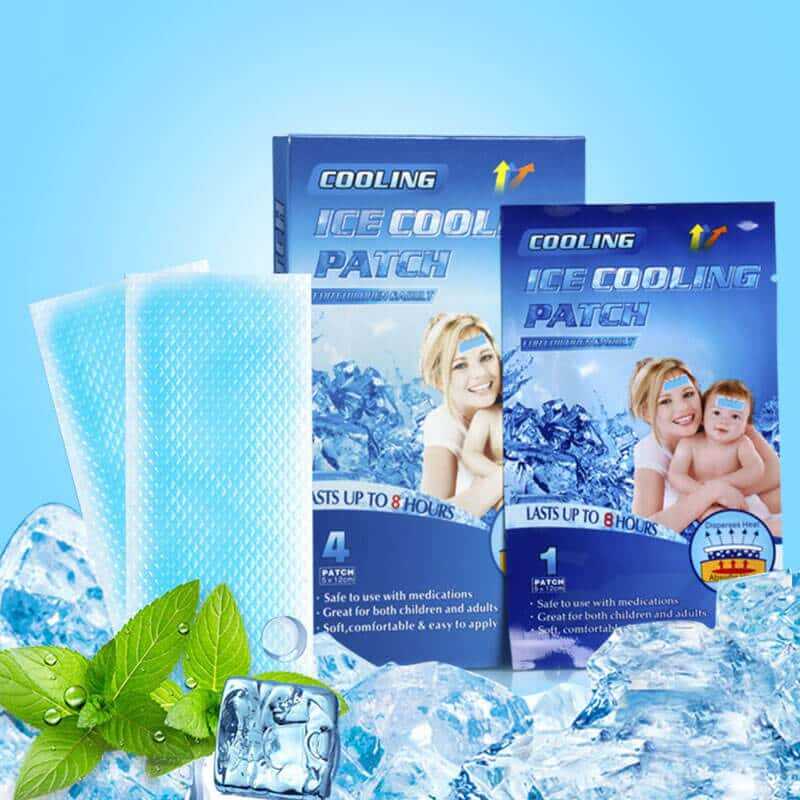
Cooling gel patches — sometimes called cooling gel pads or hydrogel cooling patches — work through a physical cooling mechanism. The patch contains a water-rich hydrogel matrix that absorbs and dissipates heat from the skin surface, creating a localized cooling sensation. Some cooling gel patches also contain menthol or other cooling agents that enhance the sensation by activating cold-sensitive nerve receptors in the skin (TRPM8 receptors, the same receptors that respond to menthol and mint).
The hydrogel matrix itself is the key functional component. High-quality hydrogel patches maintain their cooling effect through evaporation — the water in the gel slowly evaporates from the patch surface, drawing heat from the skin and producing a sustained cooling sensation for 4–8 hours depending on the ambient humidity and patch formulation. When menthol is added, it activates the TRPM8 receptors, amplifying the cooling sensation and providing a mild numbing effect that reduces pain signal transmission alongside the physical cooling effect.
Cooling gel patches are particularly effective for acute inflammatory conditions — sprains, strains, bruises, and other soft tissue injuries characterized by localized swelling and heat. The cooling effect constricts blood vessels in the applied area, reducing blood flow, limiting swelling accumulation, and numbing pain receptors in the immediate area. This is why cooling is the standard first-line recommendation for acute sports injuries in the first 24–48 hours.
Heat patches generate heat through an exothermic chemical reaction — most commonly iron powder oxidation. When the package is opened and oxygen reaches the iron particles, they begin to oxidize, releasing heat in a controlled reaction. The key functional variables are iron particle size and purity, oxygen permeability of the backing layer, and the presence of water-retaining agents (activated charcoal, salt, vermiculite) that regulate the reaction rate.
The heat generated by a transdermal heat patch produces several physiological effects. Increased blood flow to the applied area relaxes contracted muscles and improves flexibility. Sustained warmth acts as a counterirritant, overriding pain signals with a warm sensation that competes with pain signal transmission to the brain. And warmth increases the extensibility of collagen fibers in tendons and fascia, which is why heat is recommended for chronic stiffness and non-acute muscle tension.
Heat patches are drug-free in most of their standard formulations — the therapeutic effect comes from the heat itself, not from pharmaceutical active ingredients. This simplifies the regulatory pathway significantly compared to patches containing menthol, methyl salicylate, or lidocaine.
Cooling gel patches use a physical cooling mechanism — water evaporation from a hydrogel matrix, optionally enhanced by menthol-activated nerve receptor cooling. Heat patches use an exothermic chemical reaction to generate sustained warmth, producing physiological effects through heat-induced increases in blood flow and muscle relaxation.
Cooling gel patches produce an immediate cooling sensation within 1–3 minutes of application, with the effect lasting 4–8 hours depending on formulation and ambient conditions. Heat patches require 10–20 minutes to reach their peak operating temperature but produce sustained warmth for 8–12 hours depending on the formulation and oxygen availability.
Cooling gel patches excel for acute inflammatory injuries — sprains, strains, bruises, and swelling — and situations where consumers want immediate relief with a clean, pharmaceutical-free option. Heat patches excel for chronic muscle stiffness, menstrual cramps, arthritic joint pain, pre-performance muscle warming, and general warmth therapy where sustained heat over several hours is more valuable than immediate short-term cooling.
Cooling gel patches containing menthol require careful regulatory consideration depending on concentration and claims. In the US, menthol patches at certain concentrations may qualify as OTC monograph products; at higher concentrations or with specific claims, they may require 510(k) premarket submission. Heat patches without pharmaceutical actives are generally simpler to bring to market — they can often be positioned as wellness or general use products with fewer regulatory hurdles.
Cooling gel patches are perceived as clinical, fast-acting, and suitable for acute conditions — the "ice pack" positioning. Heat patches are perceived as comfort-focused, soothing, and suitable for chronic or wellness use — the "warm compress" positioning. Consumer preference between the two often depends on personal experience, cultural background, and the specific condition being treated.
Your target market includes athletes, sports medicine consumers, or anyone managing acute injury-related pain. Your brand positioning is clinical, professional, or performance-focused. You want a product with immediate perceived efficacy that consumers can feel working within minutes. Your distribution includes sports retail, pharmacy, or clinical channels where acute pain relief claims drive purchase decisions.
Your target market includes consumers managing chronic conditions, menstrual pain, or general wellness-oriented muscle discomfort. Your brand positioning is comfort, wellness, and drug-free pain management. You want a simpler regulatory pathway for market entry. Your distribution includes general retail, wellness stores, e-commerce, and gift channels where the drug-free positioning is a consumer preference rather than a regulatory requirement.
The ideal scenario for many brands is to offer both product types under a unified pain management brand umbrella. This allows retail buyers to carry a complete category from a single supplier, gives consumers a product recommendation at point of sale for both acute and chronic pain scenarios, and allows the brand to cross-sell across both product lines. Many of the most successful transdermal patch brands in global markets carry both cooling and warming product lines.
Cooling gel patches require precise hydrogel formulation and casting. The hydrogel matrix must have the correct water content, viscosity, and adhesion profile — too dry and it loses cooling effectiveness; too wet and it becomes uncomfortable and may not adhere properly. Production requires careful quality control of the casting process to ensure consistent gel thickness across the patch surface. Hydrogel patches are also more sensitive to humidity during storage — high humidity can cause the gel to absorb moisture from the air, affecting performance.
Heat patches require precise handling of iron oxidation chemistry. The production process must control oxygen exposure at every stage — premature activation before the package is opened renders the patch ineffective. Heat patch production lines use sealed packaging and inert gas filling to prevent pre-use activation. Quality control focuses on sealing integrity, iron content accuracy, and temperature curve validation across production batches. Heat patch production is generally more technically demanding but less humidity-sensitive than hydrogel patch production.
Kangdi Medical manufactures both cooling gel patches and heat patches in our ISO 13485 certified facility. We have the in-house technical expertise to advise you on which product type — or combination — best fits your brand's target market, positioning, and regulatory requirements.
Our cooling gel patch formulations include high-water-content hydrogel matrices for sustained 6–8 hour cooling, optional menthol enhancement for nerve-receptor amplified cooling, sports-grade adhesion for use during athletic activity, and skin-friendly, fragrance-free options for sensitive-skin consumers. Our heat patch formulations include iron oxidation patches with verified temperature curves for durations from 4 to 12 hours, drug-free positioning with simple regulatory pathway, multiple backing material options (non-woven, PU film, cotton), and premium warm-comfort positioning for wellness retail channels.
The cooling versus heat patch decision is not about which product type is better — it is about which product type is right for your specific brand, target market, and commercial objectives. Kangdi Medical's technical team can help you evaluate both options, test samples of both product types, and develop a product strategy that positions your brand for maximum market coverage.
Contact us today to discuss your brand concept and product selection. We will provide side-by-side sample evaluations, formulation recommendations, and a production plan tailored to your market entry strategy.
Email: kongdy202113@gmail.com
WhatsApp: +86 15517541011
Website: www.kongdypatch.com
Specializing in the integration of scientific research, production and marketing of medical devices


 0086-15517541011
 No.4,2nd Area,SME Poineer Park,Industry Cluster Zone,Huaiyang Country, Zhoukou, Henan, China.
 kongdy202113@gmail.com