
Author: Kongdy Patch
Date: 05 28,2026
The transdermal patch OEM market is crowded. Search for "transdermal patch OEM" and you will find hundreds of suppliers — many of them trading companies or brokers who have no production facility of their own. For buyers who are new to the market or focused primarily on price, the difference between a legitimate manufacturer and a trading intermediary may not be obvious. That lack of clarity is expensive. It leads to quality failures, missed delivery deadlines, and products that arrive without the certifications or test documentation needed to clear customs.
This article cuts through the marketing language and gives you the diagnostic framework you need to identify who you are actually talking to — a real manufacturer with quality control over every step of production, or a middleman who sources from factories and marks up the price.
A pure manufacturer owns and operates its own production facility. They have direct control over formulation, raw material sourcing, production processes, quality control, and packaging. They hold their own quality certifications (ISO 13485, GMP) in their own name. They have R&D staff, in-house testing capabilities, and the ability to respond to production problems quickly because they control the production line. Pure manufacturers are the most reliable long-term partners for serious brand owners.
Many established factories have a separate international trading company that handles export logistics, documentation, and buyer communication. This is a legitimate and often efficient arrangement — the factory focuses on production while a dedicated export team manages the complexities of international trade. The key is to verify that the trading team is part of the same corporate entity as the factory, not an independent intermediary.
A trading company purchases products from one or more factories and resells them to international buyers. They typically do not hold quality certifications in their own name, do not have in-house R&D, and have limited ability to resolve production quality issues because they do not control the manufacturing process. Trading companies are not necessarily bad partners — but they add a layer of cost and remove a layer of quality control that you need to account for when evaluating their quotes.
A broker is a commission-based intermediary who connects buyers with manufacturers and typically takes a fee for each transaction. Brokers may not have ongoing relationships with factories, cannot guarantee production quality, and may disappear once the transaction is complete. Working with brokers creates significant risk of quality failures with no recourse.
Legitimate manufacturers can arrange a video tour of their production lines, R&D labs, and quality testing areas. If a supplier deflects every request for a facility tour — whether in person or via video — they may not have a production facility at all, or the facility they do have may not be the one producing your product.
ISO 13485 and other quality certificates are issued to a specific legal entity. If your supplier's ISO certificate shows a company name that differs from the company you are communicating with, you may be dealing with a different entity — possibly a parent company, an associated factory, or a company that has no actual connection to the supplier you are working with. Request the original certificate and verify the certificate number with the issuing certification body.
When a supplier describes their production as happening at "our partner factories" without naming a specific facility, they are almost certainly a trading company. Legitimate manufacturers speak in first person: "Our facility produces," "Our production lines include," "Our R&D team develops." A supplier who uses third-person language about their production capabilities is telling you they do not directly control those capabilities.
Brokers and some trading companies source products from multiple factories. When you request a sample and it arrives with packaging, labeling, or quality characteristics that differ significantly from their catalog materials or website images, you are likely dealing with a product from a factory that is not the one they represent. Always cross-check sample consistency against the supplier's stated production capabilities.
If your product requires any customization — different active ingredient ratios, custom patch dimensions, modified backing materials — and the supplier responds by saying they will "check with the factory," they do not have in-house R&D. A manufacturer with genuine R&D capability can discuss formulation parameters, material substitutions, and custom specifications directly with their technical team.
Legitimate manufacturers with genuine production experience respond to technical questions with specific, detailed answers. If a supplier's responses to your technical questions are vague, templated, or defer constantly to someone else, they may be relaying questions to an actual factory without direct technical knowledge. The best manufacturing partners can discuss your product specifications with confidence and expertise.
A real manufacturer can provide batch production records, in-house test reports, incoming material inspection records, and deviation reports for any production run. This documentation is generated as part of their quality management system and is available for buyer review as part of standard due diligence processes.
Premium manufacturers have R&D engineers, quality control specialists, and regulatory affairs staff who can engage with your technical questions directly. When you ask about adhesion specifications, skin compatibility requirements, or regulatory documentation for your specific target market, you should be talking to a technical expert — not a sales representative relaying messages from the factory.
If a factory claims to produce ISO 13485 medical devices, their certificate should reflect that scope. Verify that the certification body that issued their ISO 13485 certificate is an accredited registrar (such as TÜV, SGS, BSI, or DEKRA), and confirm that the scope of their certificate covers the specific products and production processes they claim to support.
The best manufacturers are honest about what they can and cannot do. A manufacturer who tells you "our current capacity for this product type is X units per month, so for your volume we would need to plan an additional production run" is demonstrating operational transparency. A broker or trading company will tell you they can fulfill any order volume regardless of actual capacity, then scramble to source from whatever factory they can find.
Established manufacturers with strong quality track records maintain long-term relationships with their buyers. Ask prospective suppliers for references — brand names or company names you can contact to verify their experience. A manufacturer who can provide references from established brands in your target market is demonstrating a quality track record that trading companies and brokers cannot match.
These questions are designed to be difficult for non-manufacturers to answer without revealing their intermediary status.
Ask: Can you provide the certificate of analysis (COA) for the raw material lot used in our sample? Manufacturers who produce in-house can trace raw materials by lot number and provide COA documentation. Brokers typically cannot provide this level of traceability.
Ask: Which of your production lines will our order run on, and can we arrange an inspection visit? Manufacturers with genuine production facilities welcome factory visits and can identify specific production lines. Trading companies deflect or delay on visits.
Ask: What is your production yield rate, and how do you handle batches that do not meet specification? Real manufacturers have documented scrap rates, rework procedures, and deviation handling protocols. Trading companies cannot answer this question because they are not present during production.
Ask: Who is our point of contact for quality issues during production, and how quickly can we expect a response? A manufacturer with genuine production oversight will have a quality team designated for buyer communication. A trading company will route issues back to the factory, creating delays and communication gaps.
Ask: Can we review your most recent quality audit report (internal or external)? ISO-certified manufacturers conduct regular internal and external audits. The audit report reveals whether the facility is operating to its quality management system standards.
Trading companies and brokers add margin at each step of the supply chain. A quote from a broker may appear 10–20% lower than a quote from a direct manufacturer — but that gap typically reflects the broker's commission and the fact that the factory supplying the broker's product often charges a premium because the broker is not a high-volume, long-term customer.
The real cost of working with intermediaries shows up in quality inconsistency, communication delays, inability to resolve production problems quickly, and the risk of discovering that the product you received does not match the sample you approved. For a serious brand, these costs far outweigh any price advantage.
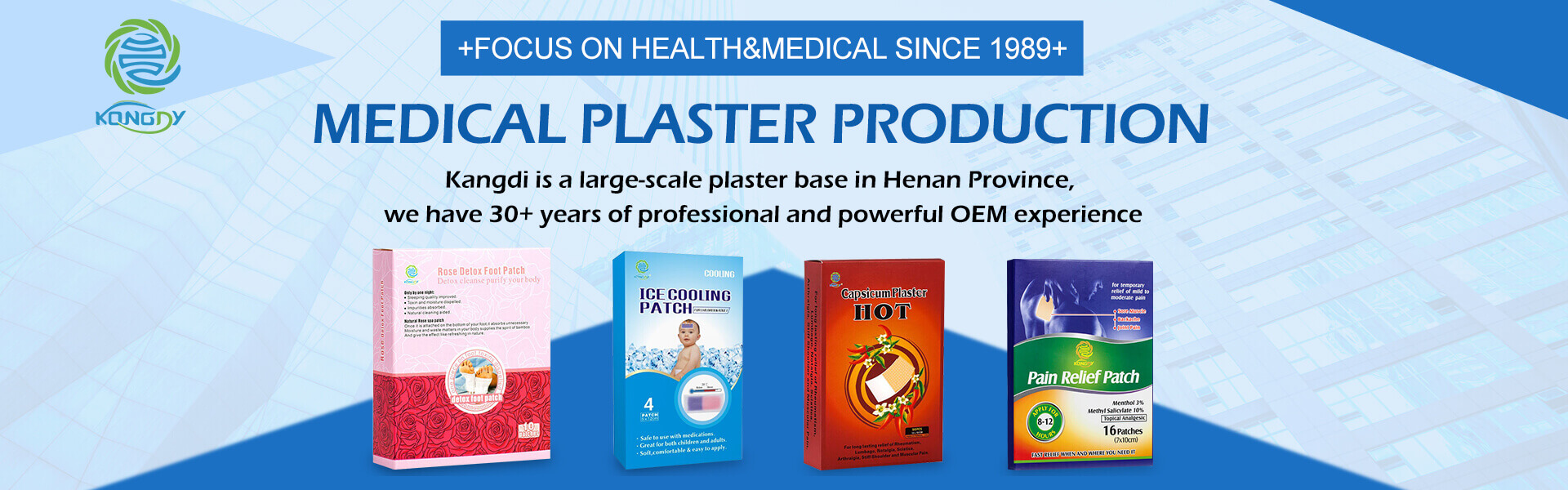
Kangdi Medical is a pure manufacturer with 37 years of experience producing transdermal patches and related products. We own and operate our production facility in Henan Province, China. Our ISO 13485 certified production lines are TÜV audited. Our in-house R&D team, quality control team, and regulatory affairs specialists work directly with every buyer — no intermediaries, no trading company markup.
We invite every prospective buyer to verify our manufacturing capabilities through documentation review, sample evaluation, and — for buyers who require it — factory audits. A manufacturer who welcomes scrutiny is the manufacturer you can trust as a long-term partner.
The best way to separate a real manufacturer from a trading company or broker is direct verification: review their documentation, test their samples against their claims, and ask the technical questions that only a real manufacturer can answer. Kangdi Medical welcomes your due diligence process.
Email: kongdy202113@gmail.com
WhatsApp: +86 15517541011
Website: www.kongdypatch.com
Specializing in the integration of scientific research, production and marketing of medical devices


 0086-15517541011
 No.4,2nd Area,SME Poineer Park,Industry Cluster Zone,Huaiyang Country, Zhoukou, Henan, China.
 kongdy202113@gmail.com