
Author: Kongdy Patch
Date: 06 25,2026
Fever patches (also called cooling gel patches or fever cooling pads) have become a fixture in family medicine cabinets around the world, used by parents to provide comfort and reduce fever in children. The global fever patch market for pediatric use exceeded USD 800 million in 2025, with growth driven by parental preference for non-medicated cooling options, the ease of use compared to oral medications, and the reduced risk of side effects compared to systemic antipyretics like acetaminophen or ibuprofen. But despite their popularity, fever patches are often misunderstood and misused, with parents applying them too early, too late, in the wrong location, or for the wrong reasons. This 2026 parenting and pediatric health report covers what pediatricians want every parent to know about fever patches, the age-specific guidelines, the evidence base for cooling therapy, the common mistakes that parents make, and the proper role of fever patches in a comprehensive home fever management strategy. Whether you are a first-time parent navigating your child's first fever or an experienced parent refreshing your knowledge, this report will help you use fever patches more effectively and safely.
Pediatric fever is one of the most common reasons for medical visits and parental concern. The basic facts: fever is a symptom, not a disease, defined as a rectal temperature above 38.0°C (100.4°F) or an oral/axillary/tympanic temperature above 37.5-37.8°C (99.5-100.0°F). Fever is the body's natural response to infection and is generally beneficial, helping the immune system fight off pathogens. The goal of fever management is not always to eliminate the fever, but to keep the child comfortable and to monitor for signs of serious illness. The age considerations: infants under 3 months with fever require immediate medical attention (any fever in this age group is considered high risk), infants 3-6 months with fever warrant a call to the pediatrician, infants and children 6 months and older with fever can typically be managed at home with appropriate monitoring. The signs of serious illness that require immediate medical attention include: difficulty breathing, persistent vomiting, refusal to drink or eat, lethargy or unresponsiveness, rash, stiff neck, severe headache, and fever lasting more than 24 hours in infants or 3 days in older children.
Pediatricians have a clear perspective on fever management that often differs from common parental practices. The first principle: fever is the body's friend, not the enemy. The fever itself is rarely harmful, and the primary goal of treatment is comfort, not temperature reduction. Many pediatricians now use the phrase "treat the child, not the number" to emphasize that the child's appearance and behavior are more important than the temperature reading. The second principle: focus on hydration. Children with fever lose more water than usual through sweat and respiration, and the most important supportive care is ensuring adequate fluid intake. The third principle: medication when needed, not by default. Acetaminophen and ibuprofen are appropriate for children who are uncomfortable or in pain, but are not always necessary for low-grade fever in a comfortable child. The fourth principle: cooling therapy complements but does not replace other measures. Fever patches, cool compresses, and lukewarm baths can help reduce fever and improve comfort, but should be used in combination with hydration, rest, and monitoring, not as a standalone treatment. The fifth principle: trust your parental instinct. If your child looks very ill, is behaving unusually, or you are worried, contact your pediatrician regardless of the temperature reading.
The appropriate use of fever patches varies significantly by age. For infants under 6 months: fever patches are generally not recommended for this age group, as fever in young infants can be a sign of serious infection requiring medical evaluation; if the pediatrician recommends cooling therapy, a cool (not cold) compress on the forehead is preferred. For infants 6-12 months: fever patches can be used under parental supervision, with patches placed on the forehead or the back of the neck, never on the chest or directly over the heart; the patches should be removed if the infant shows signs of discomfort, shivering, or skin irritation. For toddlers 1-3 years: fever patches are well-tolerated and can be used more freely, with multiple patches applied to the forehead, back of the neck, and even the inner thighs or wrists; the patches are particularly useful for children who resist oral medications. For children 3-12 years: fever patches can be used in combination with oral antipyretics if needed, with patches providing additional comfort; the children are typically able to communicate if the patch feels uncomfortable. For teens: fever patches are well-tolerated and can be used for comfort, though teens are typically able to manage their own fever management with oral medications.
The evidence base for fever patches is mixed, with both supportive and limited findings. The supportive evidence: cooling therapy in general (including cool compresses, cooling blankets, and fever patches) has been shown in multiple studies to reduce skin temperature and improve comfort in febrile children; the mechanism is heat transfer from the skin to the cooling gel, with the effect lasting 4-8 hours per patch. The limited evidence: there is less evidence that cooling therapy reduces core body temperature significantly, especially when used alone without antipyretic medication; the primary benefit appears to be comfort rather than fever reduction. The clinical guidance: most pediatric societies (American Academy of Pediatrics, Canadian Paediatric Society, UK NICE) recommend cooling therapy as a complementary measure for fever management, with the caveat that it should not be the only intervention for significant fever. The practical implication: fever patches are useful for comfort and for supplementing other measures, but should not be relied upon as the sole treatment for high fever in children. The parents who use fever patches most effectively are those who combine them with hydration, rest, monitoring, and appropriate use of antipyretic medications when needed.
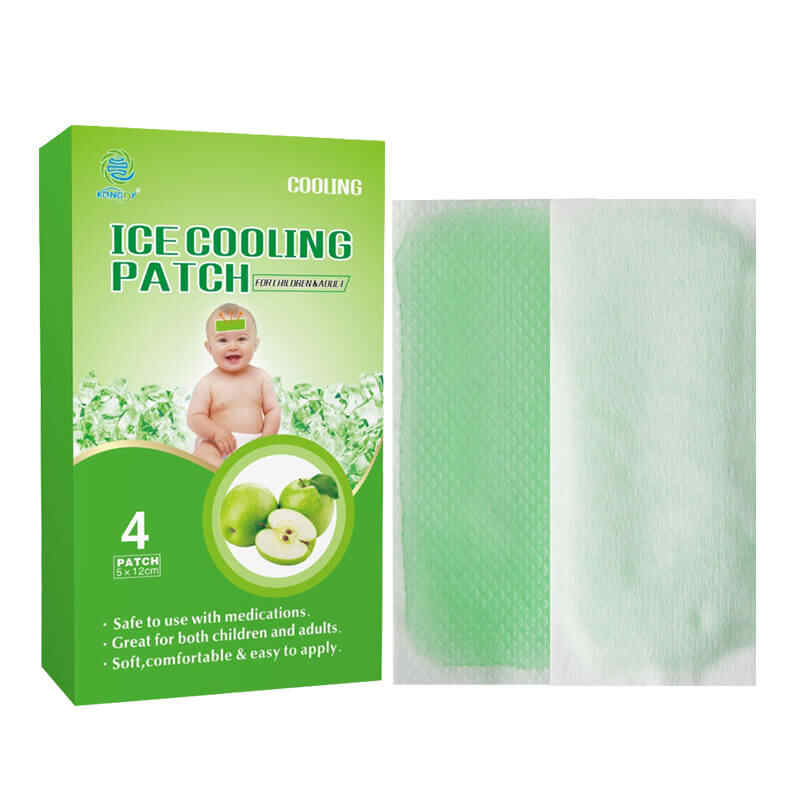
The location of fever patch application affects both the cooling effect and the comfort of the child. The 6 best locations are: the forehead (the most common and most comfortable location, providing good cooling effect and easy application), the back of the neck (a particularly effective location because the major blood vessels run close to the skin, allowing for more efficient heat transfer), the inner wrists (the blood vessels are also close to the skin at the wrists, providing good cooling effect, though the patches may need to be secured with a light wrap), the inner thighs (effective for older children and for combining with other locations, though may be uncomfortable for younger children), the armpits (effective for older children, though may be uncomfortable and limit arm movement), and the temples (effective for headaches associated with fever, though may be too small for the standard fever patch size). The locations to avoid: the chest (over the heart, which can cause discomfort), the abdomen (less effective for cooling and may cause discomfort), the genitals (sensitive area that may be uncomfortable), and broken or irritated skin (risk of skin irritation and infection). The most common application mistake is using a single patch on the forehead when multiple patches on multiple locations would be more effective.
Several common mistakes can undermine the effectiveness of fever patches or cause additional problems. Mistake 1, applying patches to children who are shivering (shivering is the body's way of generating heat to fight infection; applying cooling therapy during shivering can cause the body to generate more heat, working against the cooling effect). Mistake 2, using frozen patches (frozen patches are too cold and can cause skin damage, especially in young children; the patches should be stored at room temperature or in the refrigerator, not in the freezer). Mistake 3, applying patches for too long (most patches are designed for 4-8 hours of use; longer use can cause skin irritation and may reduce the cooling effect as the gel warms up). Mistake 4, ignoring the temperature reading (fever patches provide comfort, not cure; if the fever is high or persistent, antipyretic medication and medical evaluation are needed). Mistake 5, using patches as a substitute for hydration (cooling therapy does not address the dehydration risk of fever; fluids remain essential). Mistake 6, reusing single-use patches (most fever patches are designed for single use; reusing can reduce the cooling effect and increase infection risk). Avoiding these mistakes requires understanding the proper role of fever patches in fever management and using them appropriately.
The best fever management plan for families in 2026 combines fever patches with other evidence-based measures. Step 1, assess the child (look for signs of serious illness, check the temperature accurately with a reliable thermometer, note the duration of the fever and any associated symptoms). Step 2, ensure hydration (offer water, diluted juice, or oral rehydration solution frequently; monitor for signs of dehydration including dry mouth, decreased urine output, and no tears when crying). Step 3, provide comfort (dress the child in light clothing, keep the room at a comfortable temperature, apply fever patches to the forehead and back of the neck for additional comfort). Step 4, use antipyretics when appropriate (acetaminophen for children 2 months and older, ibuprofen for children 6 months and older, following the dosing instructions carefully; antipyretics are appropriate when the child is uncomfortable, in pain, or has a fever above 39°C/102°F). Step 5, monitor and follow up (recheck the temperature every 4-6 hours, watch for signs of serious illness, contact the pediatrician if the fever persists or worsens). Step 6, know when to seek emergency care (difficulty breathing, persistent vomiting, lethargy or unresponsiveness, rash, stiff neck, severe headache, fever in infants under 3 months).
Despite their general safety and effectiveness for comfort, fever patches are the wrong choice in several situations. For infants under 3 months with fever: the priority is medical evaluation, not home cooling therapy. For children with signs of serious illness: the priority is medical care, not fever management. For children with skin sensitivity or allergies: some children may react to the adhesive or gel ingredients; testing a small area first or consulting with a pediatrician is appropriate. For children with certain medical conditions: children with circulation problems, skin conditions, or neurological conditions may need specialized guidance. For situations where the parent is overly anxious about the fever: if the focus on fever reduction is causing parental anxiety, the pediatrician's advice is to focus on the child's overall appearance and behavior rather than the temperature reading. In all these situations, the appropriate response is medical consultation, not continued reliance on home cooling therapy.
Fever patches are a useful tool in the family wellness toolkit, but they are most effective when used appropriately and in combination with other evidence-based measures. The brands that succeed in this category are those that combine effective products with clear parental education, that work with pediatricians and healthcare professionals, and that build trust through consistent performance and responsible marketing. The brands that fail are those that overpromise efficacy, that market fever patches as a substitute for medical care, or that ignore the importance of clear usage instructions. At Kangdi Medical, we support family wellness brands with product development, parental education materials, and category expertise, with 20+ years of experience in the fever patch category.
Email: kongdy202113@gmail.com
WhatsApp: +86 15517541011
Website: www.kongdypatch.com
Specializing in the integration of scientific research, production and marketing of medical devices


 0086-15517541011
 No.4,2nd Area,SME Poineer Park,Industry Cluster Zone,Huaiyang Country, Zhoukou, Henan, China.
 kongdy202113@gmail.com