
Author: Kongdy Patch
Date: 06 15,2026
The respiratory wellness category is crowded with three distinct product types that look similar at first glance: nasal strips (external adhesive strips), nasal patches (transdermal aromatherapy patches), and aromatherapy inhalers (portable wick-based inhalers). Each addresses nasal breathing, congestion, and wellness in a different way, with different use cases, regulatory classifications, and consumer expectations. For retailers, distributors, and brand owners, choosing between these product types — or deciding to carry multiple — requires a clear understanding of the differences. This comparison guide evaluates all three product types across 10 dimensions, helping you make informed sourcing and merchandising decisions for the 2026 market.
Quick Summary: For the fastest scanning, the three product types are fundamentally different in mechanism, application, and target use case. Nasal strips are mechanical, applied externally, and used for athletic performance and snoring. Nasal patches are transdermal, applied to specific body areas, and used for sustained aromatherapy and congestion relief. Aromatherapy inhalers are direct nasal inhalation, portable, and used for on-demand relief and focus. Each has clear strengths, and the best respiratory wellness retailers often carry all three to serve different customer needs and use occasions.
| Dimension | Nasal Strip (Breathe Right Style) | Nasal Patch (Aromatherapy Transdermal) | Aromatherapy Inhaler (Wick-Based) |
|---|---|---|---|
| Mechanism | Mechanical: lifts nasal passages open | Transdermal: delivers essential oils through skin | Direct inhalation: volatile oils vaporize from wick |
| Application | External, across the nose bridge | External, on chest, back, or specific body area | Direct insertion into nostril |
| Duration | 6-12 hours per strip | 6-8 hours per patch | 30-60 days per inhaler (multiple uses) |
| Primary Use | Athletic performance, snoring, nasal congestion | Relaxation, congestion relief, sleep support, motion sickness | On-demand focus, energy, nausea relief, mood |
| Active Ingredients | None (purely mechanical) | Eucalyptus, menthol, lavender, peppermint essential oils | Peppermint, eucalyptus, lavender, citrus essential oils |
| Regulatory Class | Class I medical device (most markets) | Cosmetic or general consumer product (most markets) | Cosmetic or aromatherapy product (most markets) |
| Typical B2B Price | USD 0.05-0.15 per strip | USD 0.15-0.40 per patch | USD 0.80-2.00 per inhaler |
| Typical Retail Price | USD 0.50-2.00 per strip | USD 1.50-4.00 per patch | USD 5-15 per inhaler |
| Skin Contact | Yes (adhesive on nose) | Yes (adhesive on chest/back) | No (only nasal passage contact) |
| Reusability | Single use | Single use | Multi-use (refillable in some cases) |
The three product types work through fundamentally different mechanisms, and understanding these mechanisms helps match the product to the customer's need. Nasal strips work mechanically: the embedded spring-like bands physically lift the nasal passages open, reducing airflow resistance. This is a real physiological effect, validated by clinical research, and is most effective for: athletic performance (when nasal breathing is critical for oxygen intake), snoring (when nasal congestion contributes to mouth breathing), and structural nasal issues (deviated septum, narrow passages). The limitation is that nasal strips don't add any therapeutic ingredients — they are purely mechanical.
Nasal patches (and chest patches) work through transdermal delivery of essential oils. The patch is applied to a body area (chest, back, upper lip, or specific acupressure points) and the essential oils are gradually released and absorbed through the skin or inhaled as volatile compounds. The most common active ingredients are eucalyptus (decongestant, refreshing), menthol (cooling, decongestant), peppermint (refreshing, focus), lavender (calming, sleep), and ginger (nausea relief). The effect is more subtle than direct inhalation but provides sustained relief over 6-8 hours, making it ideal for sleep support, all-day congestion relief, and relaxation.
Aromatherapy inhalers work through direct nasal inhalation of volatile compounds from a wick saturated with essential oils. The user holds the inhaler to one nostril and inhales, with the volatile compounds immediately reaching the olfactory system and providing rapid effect. The most common formulations focus on: focus and concentration (peppermint, rosemary), energy and alertness (citrus, eucalyptus), relaxation (lavender, chamomile), nausea relief (ginger, peppermint), and respiratory clearing (eucalyptus, menthol). The effect is immediate but short-lived (15-30 minutes per use), making the inhaler ideal for on-demand relief throughout the day.
The three product types serve different primary use cases, and the best brand and retail strategy typically involves matching the product to the customer's specific need. For athletic performance and sports, nasal strips are the clear winner: they provide reliable mechanical support during high-intensity activity, are widely accepted in sports communities, and have the strongest clinical evidence for athletic use. The limitation is the visible external application, which some athletes find cosmetically unappealing during competition.
For sleep support and relaxation, nasal patches (or chest patches) are the best fit: they provide sustained aromatherapy over 6-8 hours, can be applied to areas away from the face, and don't disturb sleep. The combination of lavender, eucalyptus, and other calming or decongestant oils helps users fall asleep and breathe more easily. Nasal strips are also used for sleep (reducing snoring), but the adhesive on the nose can be uncomfortable for side sleepers.
For all-day congestion relief (cold, allergies, sinus issues), the choice depends on the specific need. Nasal strips provide immediate mechanical relief, nasal patches provide sustained aromatherapy relief, and inhalers provide on-demand relief when congestion is worst. Many users combine all three: nasal strip during the day for mechanical support, nasal patch overnight for sustained relief, and inhaler for sudden congestion spikes.
For focus, energy, and productivity, aromatherapy inhalers are the clear winner: the on-demand, fast-acting delivery is ideal for quick boosts during work or study. The portability of inhalers (fits in pocket or purse) makes them convenient for office, travel, and gym use. Nasal patches are less ideal for focus applications because of the slower onset and sustained (rather than on-demand) delivery.
For motion sickness, nausea, and travel wellness, both nasal patches (ginger formulations) and inhalers (peppermint, ginger) are effective. The choice depends on the user's preference: patches for sustained effect throughout a flight or car trip, inhalers for on-demand relief when nausea spikes. Many travel wellness kits include both.
Each product type appeals to different consumer demographics, and the marketing positioning should reflect these differences. Nasal strips appeal primarily to: athletes (running, cycling, weightlifting, team sports), snorers and their partners (seeking nighttime relief), people with chronic nasal congestion (allergies, structural issues), and older adults (seeking non-drug breathing support). The marketing positioning for nasal strips emphasizes: proven mechanical effect, clinical validation, athletic performance, and snoring reduction.
Nasal patches appeal to: wellness and self-care consumers (seeking natural aromatherapy), parents (seeking non-drug solutions for children's congestion), travelers (seeking motion sickness and jet lag support), and stress and sleep-conscious consumers (seeking relaxation and sleep support). The marketing positioning for nasal patches emphasizes: natural ingredients, sustained relief, sleep support, family-safe, and travel convenience.
Aromatherapy inhalers appeal to: professionals and students (seeking focus and productivity), people with anxiety or stress (seeking on-demand calming), frequent travelers (seeking motion sickness and energy support), and the broader wellness and self-care market (seeking portable, natural products). The marketing positioning for inhalers emphasizes: portability, on-demand effect, natural ingredients, focus and energy, and lifestyle integration.
The three product types have different regulatory classifications and compliance requirements, which affect market entry strategy. Nasal strips are typically regulated as Class I medical devices in most markets, requiring: quality system compliance (ISO 13485), technical file compilation, CE marking (EU), FDA establishment registration and 510(k) exemption (US), and country-specific device listings. The medical device classification adds regulatory burden but also enables marketing claims related to "improves nasal breathing" and "reduces snoring" that are not allowed for cosmetic products.
Nasal patches (aromatherapy transdermal) are typically regulated as cosmetics or general consumer products in most markets, requiring: cosmetic GMP compliance (ISO 22716), product information file (PIF) for EU, cosmetic product notification (CPNP for EU), FDA cosmetic regulations (US), and product labeling compliance. The cosmetic classification is less burdensome than medical device and allows faster market entry, but limits the health claims that can be made.
Aromatherapy inhalers are typically regulated as cosmetics or aromatherapy products in most markets, with similar compliance requirements to nasal patches. The wick-based delivery system is not a transdermal product (no skin absorption), and the volatile compounds are not absorbed systemically. The classification is generally less restrictive than medical devices, but the marketing claims related to specific health benefits (focus, nausea relief) should be carefully reviewed for compliance in each target market.
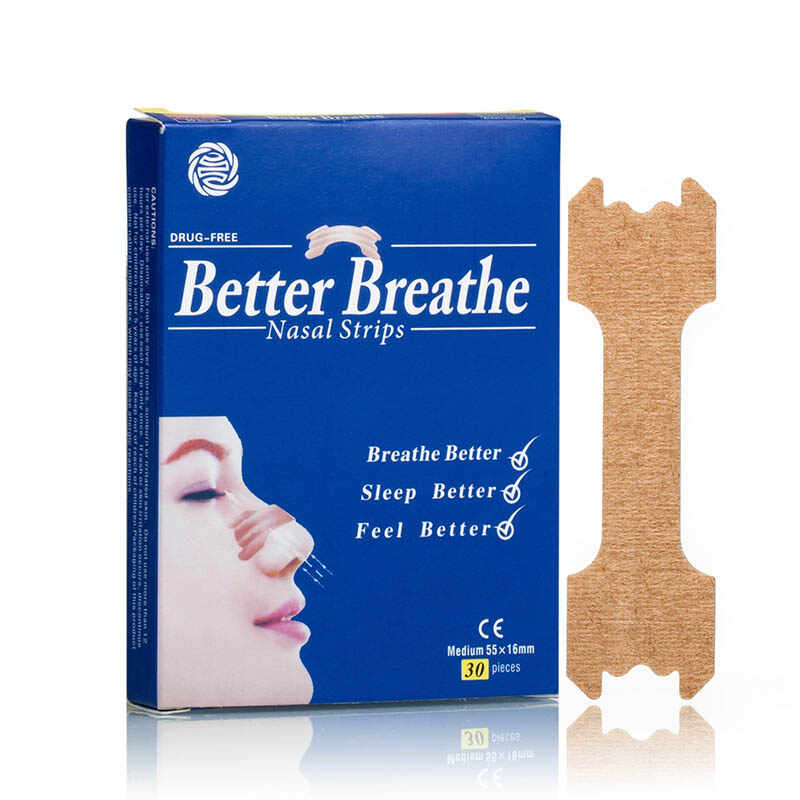
The three product types have very different manufacturing requirements, which affects OEM/ODM cost and lead time. Nasal strips are mechanically simple products: the main components are the spring-like bands (typically plastic or polymer) and the adhesive backing. The manufacturing is straightforward (cutting, laminating, slitting, packaging) with relatively low per-unit cost. The main complexity is the precision of the spring-like bands (consistent elasticity is critical for performance). The typical B2B MOQ is 10,000-50,000 units.
Nasal patches are more complex: the formulation (essential oils, adhesive matrix, backing material) requires careful development and quality control. The manufacturing involves formulation, coating, drying, slitting, die-cutting, and packaging, with quality testing for active ingredient content, adhesion, and skin safety. The typical B2B MOQ is 5,000-20,000 units, with higher MOQ for highly customized formulations. The per-unit cost is higher than nasal strips due to the formulation complexity.
Aromatherapy inhalers are different: the main component is a wick (typically cotton or porous polymer) saturated with essential oils, contained in a small tube or casing. The manufacturing involves wick preparation, oil saturation, casing assembly, and packaging. The per-unit cost is higher than strips and patches, but the multi-use nature (30-60 days per inhaler) means each unit provides many uses. The typical B2B MOQ is 1,000-5,000 units (lower MOQ due to higher per-unit cost and longer product life).
For brand owners and retailers considering the respiratory wellness category, the sourcing strategy depends on business objectives. For maximum revenue and market coverage, carry all three product types: nasal strips for athletic and snoring segments, nasal patches for wellness and sleep segments, and inhalers for focus and travel segments. This comprehensive approach captures different use cases, demographics, and price points, and creates opportunities for cross-selling and bundle offers.
For focused positioning, choose the product type that best matches the brand identity. Brands focused on athletic performance and physical wellness should focus on nasal strips. Brands focused on natural wellness, aromatherapy, and family care should focus on nasal patches. Brands focused on productivity, focus, and on-the-go lifestyle should focus on inhalers. The focused approach allows deeper brand identity and stronger differentiation.
For new entrants to the category, starting with nasal patches offers the best balance: lower regulatory complexity than nasal strips, higher market growth than strips, and broader consumer appeal than inhalers. The customization options (essential oil blends, sizes, packaging) also allow stronger brand differentiation. From there, expanding to inhalers (lower MOQ, faster iteration) or nasal strips (requires more manufacturing expertise) is a natural progression.
When evaluating products from different manufacturers within each category, the quality and performance criteria vary. For nasal strips: adhesion strength (must stay on during activity and perspiration), spring tension (consistent lifting force), comfort (no skin irritation or pressure), and packaging integrity (must remain dry and clean). For nasal patches: scent intensity (noticeable but not overwhelming), adhesion (secure but easy to remove), skin feel (no irritation, no residue), and duration (sustained release over 6-8 hours). For inhalers: scent quality (pure, natural, not synthetic), wick performance (consistent vaporization), packaging durability (no leakage), and ergonomic design (comfortable to hold and use).
The respiratory wellness category offers multiple product opportunities for brand owners and retailers, each with distinct advantages. Whether you choose nasal strips, nasal patches, inhalers, or a combination, the keys to success are: high-quality manufacturing, clear positioning, effective marketing, and customer education on the right product for each use case. At Kangdi Medical, we manufacture all three product types, with OEM/ODM services for brand owners seeking to build respiratory wellness product lines.
Contact Kangdi Medical to discuss your respiratory wellness product strategy. Our product development team can help you evaluate which product types best match your brand vision, develop custom formulations, and execute your market entry with quality manufacturing and reliable supply.
Email: kongdy202113@gmail.com
WhatsApp: +86 15517541011
Website: www.kongdypatch.com
Specializing in the integration of scientific research, production and marketing of medical devices


 0086-15517541011
 No.4,2nd Area,SME Poineer Park,Industry Cluster Zone,Huaiyang Country, Zhoukou, Henan, China.
 kongdy202113@gmail.com