
Author: Kongdy Patch
Date: 05 26,2026
China is the world's largest producer of transdermal patches. Whether you are stocking a pharmacy chain in Germany, launching a private label brand in the United States, or supplying a hospital network in Southeast Asia, chances are the patches on your shelves—or in your online store—were made in China.
But sourcing from China is not without challenges. Time zone differences, quality verification, communication barriers, and logistics complexity can turn a promising supply chain into a costly problem. This guide is written for international buyers who want to approach sourcing transdermal patches from China with clarity, confidence, and a clear process.
## 1. Why China Is the Global Hub for Transdermal Patch Manufacturing
China's dominance in the transdermal patch market is not accidental. Several structural advantages explain why:
**Scale and specialization:**
China has hundreds of dedicated transdermal patch manufacturing facilities, many clustered in provinces like Henan, Guangdong, and Zhejiang. This concentration of expertise means manufacturers have refined their processes over decades and benefit from deep supply chains for raw materials (adhesives, backing films, active ingredients, packaging).
**Cost competitiveness:**
While labor costs in China have risen in recent years, production costs remain significantly lower than in Europe, North America, or Japan. This allows international buyers to access pharmaceutical-grade products at wholesale prices that support healthy retail margins.
**Regulatory capability:**
Leading Chinese patch manufacturers now hold ISO 13485, GMP, FDA establishment registration, and CE marking documentation—meeting the quality expectations of regulated markets. This was not the case even a decade ago.
**Customization capacity:**
Chinese OEMs are highly flexible with custom formulations, ingredient concentrations, patch sizes, packaging designs, and label languages. For private label buyers, this flexibility is a major advantage.
## 2. The Sourcing Process: Step by Step
### Step 1: Define Your Product Specifications
Before contacting any manufacturer, you need a clear product brief. This includes:
- **Product type:** Warming patch, menthol cooling patch, capsaicin patch, combination patch, or foot patch?
- **Active ingredients:** Which ingredients, at what concentration? Do you need a custom formulation?
- **Patch specifications:** Size (cm × cm), shape (rectangular, round, custom), adhesion level, wearing time
- **Packaging:** Number of patches per pouch/box, packaging materials, printing (full color, simple)
- **Target market:** United States, European Union, Southeast Asia, Middle East? This determines regulatory requirements
- **Certifications needed:** ISO 13485, GMP, FDA, CE, or other market-specific requirements
- **Volume:** Annual projected volume and first-order quantity (MOQ)
The more specific your brief, the more accurate and actionable the quotes you receive will be.
### Step 2: Find and Shortlist Suppliers
**Where to search:**
- B2B platforms: Alibaba.com, Made-in-China.com, GlobalSources
- Industry directories: Medical device supplier databases
- Trade shows: Canton Fair (Guangzhou), CMEF (Shanghai), international health product fairs
- Referrals: Industry contacts who already source from China
**What to look for in a supplier profile:**
- **Business type:** Trading company vs. manufacturer (prefer manufacturer for better price and quality control)
- **Certifications:** ISO 13485:2016, GMP certificate, FDA registration
- **Production capacity:** Monthly output, factory size, number of production lines
- **Export experience:** Which countries do they regularly export to?
- **Product range:** Do they specialize in patches or offer dozens of unrelated product categories?
**Shortlist 3–5 suppliers** before moving to the next step. Avoid putting all your efforts into a single supplier—this limits your negotiation leverage and backup options.
### Step 3: Verify Credentials and Factory Identity
This is the step most buyers skip—and the one that causes the most problems later.
**Ask for and verify:**
1. **ISO 13485:2016 certificate:** Request a copy with the certificate number. Verify it through the issuing certification body (TÜV, SGS, Bureau Veritas, etc.)
2. **FDA establishment registration:** Check the FDA registration number against the FDA public database
3. **CE certificate (for EU buyers):** Identify which Notified Body issued the certificate, then verify the NB number on the EU NANDO database
4. **Business license:** Confirms the company is legally registered in China
5. **Factory photos or video tour:** A credible manufacturer will provide photos of their production lines, quality testing labs, and warehouse
**Red flags:**
- Certificate cannot be independently verified
- Factory address inconsistent with company registration
- Refuses to show production facility
- Responds only with generic marketing materials and no technical documentation
- Price quote dramatically below market average
### Step 4: Request and Evaluate Samples
Samples are non-negotiable. Never commit to mass production without testing the actual product.
**What to request:**
- 2–5 units of each product type you are considering
- Samples with your target specifications (concentration, size, packaging)
- Pre-production samples from the actual production line (not just a lab prototype)
**What to test:**
- **Adhesion:** Does it stay in place for the labeled wearing time?
- **Active ingredient release:** Is there a measurable cooling/warming/tingling effect?
- **Skin compatibility:** Apply for the labeled duration. Watch for redness, itching, or irritation
- **Packaging quality:** Does the pouch seal properly?
- **Odor:** Check if menthol and methyl salicylate odors are acceptable for your market
### Step 5: Negotiate Terms and Sign a Contract
**Key contract elements:**
- **Product specifications:** Detailed as an appendix (concentration, size, packaging, labeling)
- **Quality standards:** Reference to ISO 13485 and your market's regulatory requirements
- **MOQ (Minimum Order Quantity):** Confirm quantity and per-unit price at various volume tiers
- **Payment terms:** Standard is 30–50% deposit, balance against copy of Bill of Lading (B/L). Avoid 100% prepayment unless you have strong trust.
- **Lead time:** From deposit receipt to ready-for-shipment
- **QC provisions:** Pre-shipment inspection by third-party agency (SGS, Bureau Veritas) recommended for orders above $5,000
- **Defect clause:** Right to reject, re-work, or credit if batch fails QC
- **IP protection:** Include NDA for custom formulations before sharing anything
### Step 6: Manage Production and Quality Control
During production, maintain active communication:
- **Request production updates:** Photos at 25%, 50%, and 75% milestones
- **Pre-shipment inspection (PSI):** Third-party inspection of quantity, labeling, active ingredient concentration, and adhesion
- **Sample retention:** Ask manufacturer to retain production samples for 12 months
### Step 7: Handle Shipping and Customs
**Shipping options:**
- **Sea freight (20–40 days):** Most cost-effective for large orders
- **Air freight (5–10 days):** Reserved for urgent reorders
- **Express courier (3–7 days):** Suitable for samples or small orders under 30 kg
**Key documents from your supplier:**
- Commercial invoice
- Packing list
- Bill of Lading (B/L)
- Certificate of Origin
- Certificate of Analysis (CoA) for the batch
- Quality certificates (ISO 13485, etc.)
## 3. Common Mistakes International Buyers Make
### Mistake #1: Choosing Based on Price Alone
The cheapest quote often reflects compromises in ingredient quality, production standards, or packaging materials. Compare quotes from 3–5 suppliers on the same specification, then verify credentials and sample quality before deciding.
### Mistake #2: Skipping Sample Testing
Ordering mass production without testing samples is the single most common cause of sourcing failures. The cost of one bad batch—freight, customs duties, destruction, and brand damage—far exceeds proper pre-production testing.
### Mistake #3: Not Accounting for Labeling Costs and Timeline
Custom multilingual labeling adds 1–2 weeks and $0.05–$0.20 per unit to your cost. First-time buyers often overlook this and are surprised by the final invoice.
### Mistake #4: Ignoring Intellectual Property
If you are sharing a custom formulation or brand design, get a signed NDA and IP protection clause before sharing anything.
### Mistake #5: Not Planning for Lead Time
Mass production takes 2–4 weeks. Sea freight adds 3–8 weeks. Plan your inventory 12–16 weeks ahead of your expected sales date.
## 4. The Kangdi Medical Advantage for International Buyers
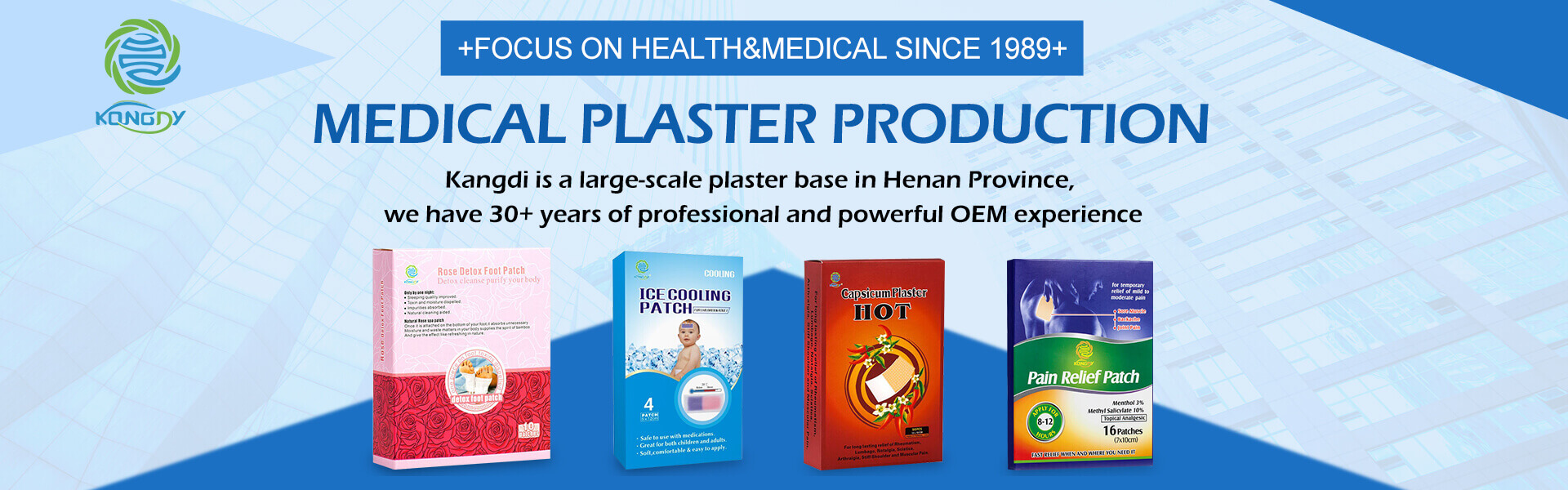
At Kangdi Medical, we have 37+ years of experience manufacturing transdermal patches for global markets. We understand the specific requirements of buyers in North America, Europe, Southeast Asia, and the Middle East.
**What we offer international buyers:**
- ISO 13485:2016 certified facility (TÜV audited)
- FDA establishment registration for US market exports
- Full CE technical file documentation for EU market
- Custom formulation development with NDA protection
- Pre-shipment third-party inspection support
- Multi-language labeling (English, Spanish, French, German, Arabic, and more)
- Flexible MOQ for market testing (as low as 5,000 units for some products)
- Responsive English-language account management
We welcome buyer audits—visit our production facility in Henan Province, China, or request a live video tour.
**Ready to source your first order?**
- Email: kongdy202113@gmail.com
- WhatsApp: +86 15517541011
- Website: www.kongdypatch.com
## FAQ: Sourcing Transdermal Patches from China
**Q: What is the typical MOQ for pain patches from China?**
A: Standard OTC pain patches typically have MOQs of 5,000–20,000 units per SKU. Custom formulations or custom packaging may require 20,000–50,000 units. Some manufacturers offer sample runs of 500–2,000 units at a premium per-unit price.
**Q: Can I visit the factory before placing an order?**
A: Yes. Most reputable manufacturers welcome qualified buyers. At Kangdi Medical, we offer both in-person factory visits and live video tours. Schedule at least 2 weeks in advance.
**Q: How do I verify a Chinese manufacturer's certifications?**
A: For ISO certificates, contact the issuing certification body directly. For FDA registration, use the FDA's public registration database. For CE certificates, verify the Notified Body number on the NANDO database (ec.europa.eu).
**Q: What payment methods are accepted?**
A: Most manufacturers accept T/T (bank wire transfer), PayPal (for small orders), and Letter of Credit (L/C) for larger orders. Standard terms are 30–50% deposit, 50–70% balance before shipment.
**Q: How long does shipping take from China?**
A: Sea freight: 20–40 days from port to port. Air freight: 5–10 days. Express courier: 3–7 days. Sea freight is recommended for orders above 500 kg.
**Q: What if the product arrives with quality issues?**
A: Your contract should include a defect resolution clause: typically the right to reject and request a replacement batch, a price credit, or a re-work order. Always conduct pre-shipment inspection by a third-party agency.
Specializing in the integration of scientific research, production and marketing of medical devices


 0086-15517541011
 No.4,2nd Area,SME Poineer Park,Industry Cluster Zone,Huaiyang Country, Zhoukou, Henan, China.
 kongdy202113@gmail.com