
Author: Kongdy Patch
Date: 05 27,2026
If you are building a transdermal patch brand, one of the first strategic decisions you will face is this: should you sell heat patches, pain relief patches, or both? The answer is not obvious. While both product types deliver therapeutic benefits through the skin, they work through fundamentally different mechanisms, serve different consumer needs, and require different regulatory pathways in key markets.
Choosing the wrong product type — or launching both without understanding the differences — can lead to misplaced inventory, regulatory complications, and customer confusion. This guide breaks down everything you need to know to make the right decision for your brand.
Heat patches, also called self-heating patches or warming patches, generate heat through a chemical exothermic reaction. When the package is opened and the patch is exposed to oxygen, iron powder in the patch begins to oxidize, producing controlled heat. This process typically continues for 8 to 12 hours depending on the formulation and the oxygen permeability of the patch's outer layer.
The heat generated serves two purposes. First, it dilates blood vessels in the applied area, increasing blood flow to muscles and joints — which helps relax stiff muscles and reduce stiffness. Second, the sustained warmth acts as a counterirritant, sending a steady warm sensation that competes with pain signals sent to the brain. Heat patches are drug-free, meaning they do not rely on pharmaceutical or chemical active ingredients to produce their effect. This drug-free characteristic significantly simplifies the regulatory pathway in most markets.
Heat patches are particularly effective for chronic muscle stiffness, menstrual cramps, arthritic joint discomfort, and situations where sustained warmth over several hours is more beneficial than immediate short-term relief.
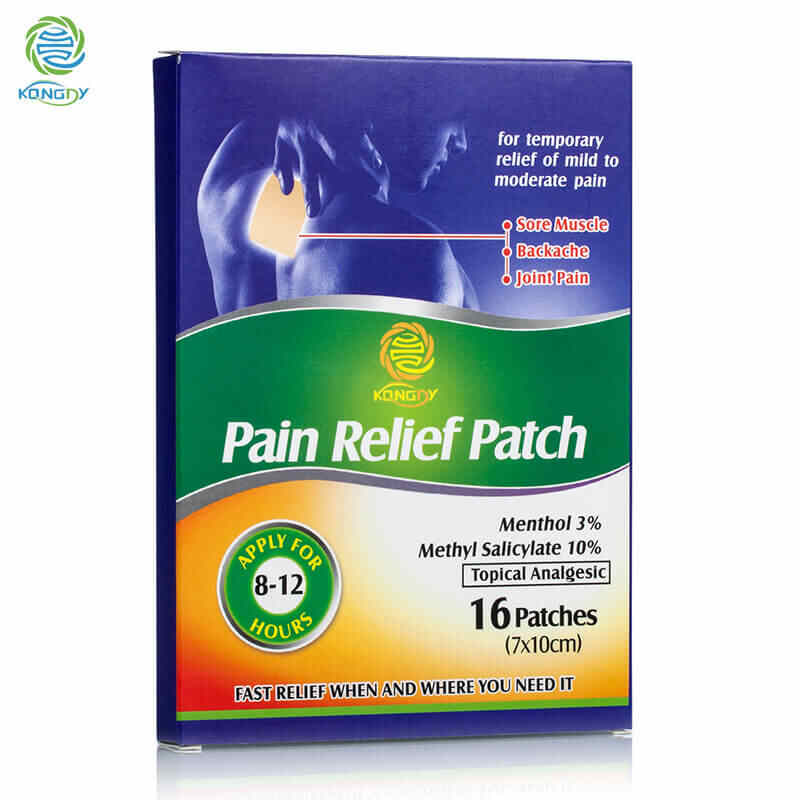
Pain relief patches work through the action of active pharmaceutical or cosmetic ingredients applied directly to the skin. The most common active ingredients include menthol and camphor, which create a cooling sensation by activating cold-sensitive nerve receptors; methyl salicylate, a topical NSAID that reduces inflammation at the site of application; lidocaine, a local anesthetic that blocks nerve signals temporarily; and capsaicin, which depletes substance P in nerve endings for longer-term pain relief in some formulations.
Because pain relief patches contain active ingredients, they are classified as therapeutic or pharmaceutical products in most regulated markets. This means they require more extensive regulatory documentation — including efficacy data, safety assessments, and in some cases pre-market approval — compared to heat patches.
Pain relief patches are effective for acute pain, sharp muscular pain, nerve pain, and inflammatory conditions where targeted pharmaceutical action provides more rapid or more potent relief than heat alone.
Heat patches use a physical, drug-free mechanism. Pain relief patches use a pharmacological or cosmeceutical mechanism with active ingredients. This is the most fundamental difference between the two product types.
Heat patches produce a gradual warming effect that builds over 20 to 30 minutes and continues for 8 to 12 hours. Pain relief patches typically produce noticeable effects within 15 to 30 minutes, though the duration varies depending on the active ingredient and its concentration. Lidocaine patches may provide relief for 4 to 6 hours per application, while menthol patches may provide shorter but quickly repeatable relief.
Heat patches excel at treating chronic, non-inflammatory conditions such as muscle stiffness, menstrual cramps, and arthritic joint pain. Pain relief patches are more appropriate for acute conditions, inflammatory pain, nerve pain, and situations where stronger or faster-acting relief is required.
Heat patches as a category face fewer regulatory hurdles globally because they typically contain no pharmaceutical active ingredients. In the US, drug-free warming patches may be classified as medical devices or general wellness products depending on their claims. Pain relief patches with active pharmaceutical ingredients face more complex classification — ranging from OTC monograph products to 510(k) cleared devices in the US, and from Class I to Class IIa medical devices in the EU.
Heat patches are often perceived as natural, drug-free, and safe for long-term or frequent use. This positioning appeals to health-conscious consumers, older adults, and consumers with concerns about oral pain medication. Pain relief patches carry a more clinical or pharmaceutical association, which appeals to consumers seeking targeted, potent relief. Your brand positioning should guide which product type — or combination — aligns with your target audience.
Your target market values natural and drug-free products. Your brand positioning centers on wellness, self-care, and comfort rather than clinical efficacy. You want a simpler regulatory pathway with faster time to market. You are targeting markets where consumers prefer non-pharmaceutical pain management options. Your distribution channels include wellness retail, pharmacy chains with conservative OTC policies, or general retail environments.
Your target market includes consumers with acute pain conditions who need stronger relief. Your brand positioning is clinical, professional, or pharmaceutical. You have the regulatory expertise and budget to navigate 510(k) or CE technical file submissions. Your distribution includes pharmacies, clinics, or e-commerce channels where therapeutic claims drive conversion. You are targeting the sports medicine, physiotherapy, or professional healthcare channels.
You have the resources to manage two product lines and your target market spans the full range from wellness-oriented consumers to those seeking clinical pain relief. Many successful brands offer a warm therapy line alongside a medicated pain relief line, allowing retail buyers to carry a complete pain management category from a single supplier.
Both heat patches and pain relief patches are experiencing strong demand in global markets. The warming patch category has seen particularly strong growth driven by consumer preference for drug-free wellness products, expansion of e-commerce retail channels, and increased awareness of the dangers of long-term NSAID use. The patch for muscle pain category continues to grow as sports participation increases and aging populations seek non-oral pain management solutions.
For brand owners and importers, the strategic question is not which product type wins — it is which product type fits your brand identity, target market, regulatory capability, and distribution strategy. Both categories offer real business opportunities. The best choice is the one you can execute with quality, compliance, and consistent supply.
Kangdi Medical manufactures both heat patches and pain relief patches in our ISO 13485 certified facility, giving brand owners the flexibility to develop one product line or both from a single trusted manufacturing partner. Our product capabilities span self-heating warming patches in multiple formats and durations, menthol and camphor-based analgesic patches, capsaicin and lidocaine formulations where applicable, and fully custom formulations developed to your specifications.
Working with one manufacturer for both product categories simplifies your supply chain, reduces coordination complexity, and allows you to leverage a single regulatory documentation framework where product lines overlap in their market requirements. Our team has experience supporting brands launching in North America, Europe, Southeast Asia, and the Middle East.
The decision between heat patches and pain relief patches — or the choice to carry both — is one of the most consequential strategic calls you will make for your brand. It shapes your regulatory pathway, your supply chain, your marketing positioning, and your customer base.
Talk to our team at Kangdi Medical. Share your brand concept, target market, and distribution strategy. We will help you evaluate which product type or combination best serves your goals, and we will provide a detailed manufacturing plan with transparent pricing and timelines.
Email: kongdy202113@gmail.com
WhatsApp: +86 15517541011
Website: www.kongdypatch.com
Specializing in the integration of scientific research, production and marketing of medical devices


 0086-15517541011
 No.4,2nd Area,SME Poineer Park,Industry Cluster Zone,Huaiyang Country, Zhoukou, Henan, China.
 kongdy202113@gmail.com